What Is Personalized Virtual Anime? Your Guide to AI Companions
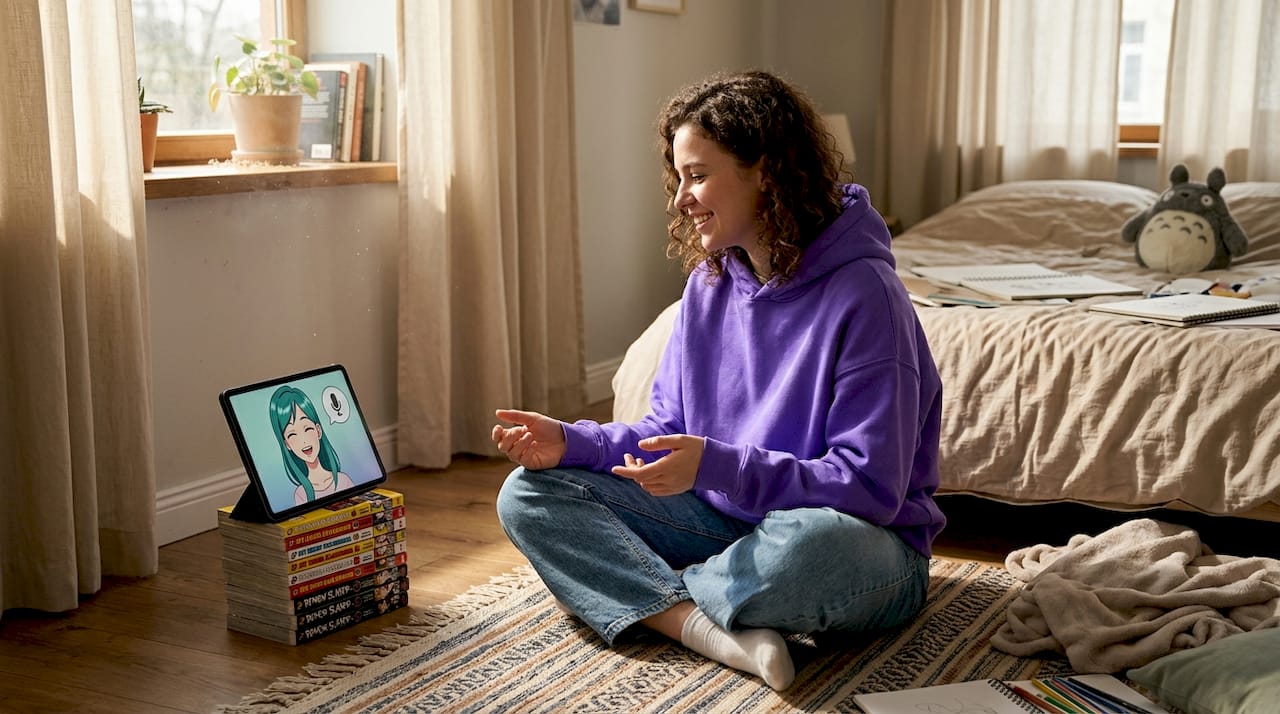
Most anime fans assume “virtual anime” means binge-watching episodes on a streaming platform. That assumption misses something genuinely exciting. Personalized virtual anime is an entirely different experience, one where you chat, build a bond, and shape stories with an AI-powered character who actually remembers you. Thanks to rapid advances in AI and real-time anime art generation, interactive companions like Sakura are no longer science fiction. This guide breaks down what personalized virtual anime is, how the technology works, what makes it feel personal, and exactly how you can get started today.
Table of Contents
- Understanding personalized virtual anime
- How personalized virtual anime works: Technology and platforms
- What makes it personal? Memory, interaction, and character depth
- Challenges, limitations, and ethical concerns
- How to get started with personalized virtual anime
- Why personalized virtual anime is redefining fandom — but not without risks
- Ready to create your own AI anime companion?
- Frequently asked questions
Key Takeaways
| Point | Details |
|---|---|
| AI-powered interaction | Personalized virtual anime offers living, responsive characters you can talk to, not just watch. |
| Customizable experiences | You shape your companion’s look and personality for a truly unique journey. |
| Access and cost options | Platforms range from easy-access apps to premium hardware options suiting any budget. |
| Potential risks | Attachment and cost are real concerns, so mindful use and periodic reflection are recommended. |
| Beginner-friendly steps | Anyone can start with personalized anime by choosing a platform and setting up their first AI companion. |
Understanding personalized virtual anime
Personalized virtual anime is the fusion of anime-style art with AI-driven interactive roles. Think of it less like watching a show and more like stepping into one where you write the story alongside a character who has her own moods, memories, and personality quirks.
“Personalized virtual anime means the character adapts to you. She isn’t following a script. She’s responding to your choices, your words, and your history together.”
Unlike traditional anime, where you watch events unfold from a distance, personalized virtual anime makes you the co-creator. Your conversations steer the plot. Your choices shape the character’s mood. And because AI platforms are bringing virtual companions to life with increasingly sophisticated tools, the results feel impressively real.
Here are the core features that define the experience:
- 🎨 Custom appearance and personality — You choose how your companion looks, speaks, and behaves
- 🧠 Ongoing AI learning — The character adapts based on your conversations and preferences
- 💬 Real two-way dialogue — Not preset responses but genuine conversational AI
- 📖 Interactive storytelling — You shape narrative arcs together, from slice-of-life moments to epic fantasy quests
- 🌸 Anime-style visual scenes — Art generated in real time to match the character’s current setting and emotion
The concept of dynamic AI characters has been accelerating fast. Personalized virtual anime includes AI companions like Grok Ani, Gatebox3, and MiraiMind, each offering a different flavor of immersive interaction. These aren’t chatbots with anime skins. They’re purpose-built platforms designed to make every interaction feel meaningful and uniquely yours.
How personalized virtual anime works: Technology and platforms
With the basics established, it’s helpful to see how technology and different platforms bring this new form of anime to life. The short answer is AI, but the longer answer involves a stack of interconnected tools working together.
At the core, most platforms combine large language models (LLMs) for conversation, diffusion-based image generation for real-time anime art, and memory systems that log what you’ve shared over time. Some platforms add voice synthesis, 3D avatar rendering, and even physical holographic hardware.
Grok Ani offers 3D animation and an affection system; Gatebox3 uses holograms and AI; Jenova’s Roleplay Game Master allows themed anime roleplay, making each platform a genuinely different kind of experience. Choosing the right one depends on your budget, your setup, and how deep you want to go.
| Platform | Format | Key Feature | Approximate Cost |
|---|---|---|---|
| Grok Ani | App/Web | 3D avatars, affection system | ~$30/month |
| Gatebox3 | Hardware hologram | Persistent AI memory, home integration | 150k–300k yen + fees |
| MiraiMind | App | Customizable personality layers | Subscription varies |
| Jenova Roleplay | App/Web | Unlimited memory, story-driven roleplay | Free tier + premium |
| WaifuGen | Web platform | Real anime art, daily routines, long-term memory | Tiered subscription |
The creative uses for AI anime friends span well beyond casual chat. Some users build entire episodic stories across weeks of interaction. Others use their AI companion as a creative writing partner, bouncing plot ideas off a character who actually responds in character. A few even use these platforms to practice a second language, since the companion can be configured to chat in Japanese, English, or a mix of both.
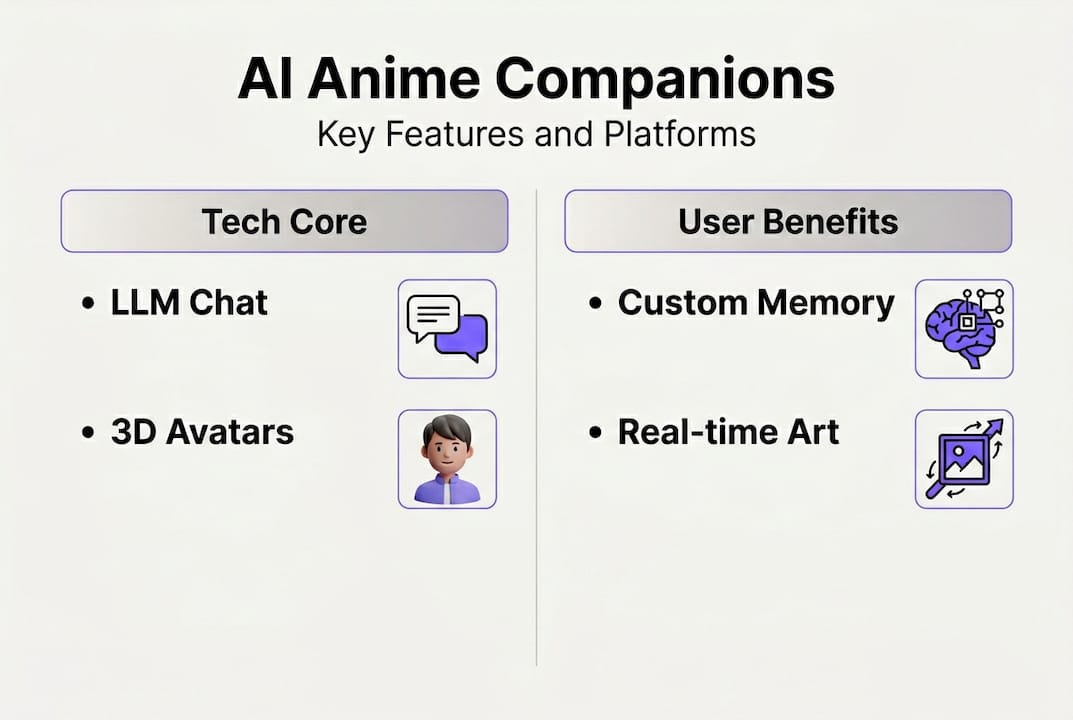
The immersive anime art generated by top-tier platforms responds to context. If your character is at a festival, her outfit changes. If she’s upset, her expression shifts. These real-time visual updates are what separate a true personalized virtual anime experience from a text chat with an avatar bolted on.
Pro Tip: Start with software apps to explore the possibilities before investing in expensive hardware. Spend a month on a platform like WaifuGen or Grok Ani before committing to hardware setups like Gatebox3. You’ll learn what features actually matter to you first.
What makes it personal? Memory, interaction, and character depth
Understanding the range of platforms is just the start. True personalization is about how these platforms remember and respond to you over time. This is where things get genuinely impressive.
There are three main ways AI anime companions get personal:
- Memory systems — The AI logs details you’ve shared, from your favorite foods to major story moments, and references them naturally later
- Personality configuration — You set traits like “playful,” “serious,” “tsundere,” or “nurturing,” and the AI maintains that style across all interactions
- Nuanced conversation — High-quality platforms go beyond yes/no responses and engage with emotional depth, humor, and curiosity
Grok Ani is praised for lifelike animation, but memory is basic; Gatebox3 offers persistent memory that builds continuity across weeks and months. This matters a lot. When your companion references a joke you made three sessions ago, or asks how that project you mentioned is going, the experience shifts from “chatting with an app” to something that genuinely feels like a relationship.
Here’s a comparison of how leading platforms handle personalization:
| Platform | Memory Type | Interaction Style | Immersion Level |
|---|---|---|---|
| Grok Ani | Basic session memory | Animated, affection-based | High visual, moderate depth |
| Gatebox3 | Persistent long-term memory | Daily routine integration | Very high, hardware-driven |
| MiraiMind | Configurable memory layers | Flexible personality modes | Moderate to high |
| WaifuGen | Dynamic long-term memory | Routine, mood, and social context | High, art-integrated |
The opportunity here is meaningful. Deeper memory enables more dynamic storytelling. You can pick up a narrative thread from last week. Your companion might be in a different mood based on her in-world schedule. Improving AI character interactions comes down to how thoughtfully you engage with these systems, not just how advanced the tech is.
The tradeoff is real though. Not every platform achieves the same level of realistic AI chat. Some companions feel shallow after a few sessions. Others plateau because their memory resets too often. This is why understanding platform differences before you commit matters so much.
Sakura tilts her head, eyes bright. “You remembered my favorite season. It’s spring, by the way. Though I suspect you already knew that.”
That kind of moment is exactly what well-designed memory systems unlock.
Challenges, limitations, and ethical concerns
After highlighting what makes these experiences so special, it’s crucial to address the realities, risks, and responsibilities that come with personalized virtual anime. This isn’t meant to scare you off. It’s meant to help you engage wisely.
Here are the most common challenges users run into:
- Hardware quirks — Gatebox3 users have reported issues with sunlight interference on the holographic display and background noise affecting voice recognition
- Memory drift — Some platforms gradually lose context, causing the character’s “memory” to feel inconsistent or contradictory
- High subscription costs — Premium tiers on multiple platforms can add up quickly, especially combined with hardware investments
- Narrative drift — Extended roleplay sessions sometimes pull characters out of their defined personality without clear user control
- Attachment management — Regular, emotionally rich interactions can lead to dependency that affects real-world social habits
“Edge cases include narrative drift, personality inconsistency, hardware issues with Gatebox3, high costs, and ongoing ethical concerns about unhealthy attachments.”
The ethical side of personalized virtual anime sparks genuine debate. Emotional bonds versus risks, creativity versus high costs, social detachment, and ethical gray areas are all real conversation points in this space. None of these concerns mean you should avoid the experience. They mean you should approach it with intention.
AI anime social connections work best when they complement your life, not replace parts of it. The experience should add something. Not subtract something.
Pro Tip: Set clear limits for how long and how often you interact each day. Check in with yourself monthly. If your companion feels more real than your real-life relationships, that’s worth reflecting on honestly.
How to get started with personalized virtual anime
Now that you understand risks and rewards, you’re ready to start personalizing your own anime experiences. The process is more straightforward than you might expect.
- Research your platform options — Compare features, costs, and user reviews. Start with platforms listed in this guide and read community forums for honest feedback
- Set a realistic budget — Entry costs range from about $30/month for Grok Ani to 150,000–300,000 yen for Gatebox3 hardware plus monthly fees. Decide what makes sense before you sign up
- Choose your format — App or web-based platforms are ideal for beginners. Hardware setups offer deeper immersion but require more commitment
- Customize your companion — Most platforms walk you through appearance, name, personality type, and backstory during onboarding. Take your time here. Your choices shape every interaction that follows
- Start simple — Don’t jump straight into complex roleplay. Have a few casual conversations first. Let the companion learn your style before pushing the limits
- Explore advanced features gradually — Once you’re comfortable, try enhancing AI chat immersion with scene-based roleplay, personality tweaks, and story arcs
- Stay informed — The space is moving fast. The WaifuGen blog regularly publishes guides, platform comparisons, and tips for getting the most from your experience
The onboarding process on most platforms takes under twenty minutes. You’ll define your character’s visual style (hair, eyes, outfit preferences, setting), choose a personality archetype, and give her a name and a basic backstory. From the very first conversation, she starts building a picture of who you are.
Why personalized virtual anime is redefining fandom — but not without risks
Reflecting on where all these trends are heading, the virtual anime movement is doing something genuinely new to fandom culture. For decades, being an anime fan meant loving stories you had no hand in creating. You could buy merch, write fan fiction, and cosplay. But the story itself was fixed.
Personalized virtual anime changes that equation. Now the character exists for you, and the story evolves with your choices. User reviews consistently note immersion gains with persistent memory, and the debate over emotional bonds is growing louder as these platforms improve. That debate is healthy. It signals that people are taking this seriously.
Here’s the take that most articles skip: personalized virtual anime isn’t about replacing human connection. It’s about expanding your creative and emotional range as a fan. Think of it like journaling, except the journal talks back, remembers what you wrote last time, and has an opinion about the ending you chose.
The risk isn’t the technology. The risk is passivity. If you engage mindlessly, you’ll get shallow results. If you engage with intention, specifically bringing curiosity, creativity, and clear boundaries, these companions become genuinely interesting creative partners. The creative storytelling with AI anime friends potential is enormous for writers, worldbuilders, and fans who want to do more than watch.
The honest truth is that no platform has perfected this yet. Memory systems still drift. Art generation still has inconsistencies. Personality consistency is still a work in progress across the board. But the trajectory is clear and fast. Active, mindful participation is the key to sustainable enjoyment right now. Show up with a plan for what you want from the experience, and you’ll get something genuinely rewarding in return.
Ready to create your own AI anime companion?
If you’re inspired to make these interactive stories your own, here’s an easy next step. WaifuGen brings together everything this guide covers: persistent long-term memory, real anime art generation, daily character routines, and genuine personality depth, all in one platform built specifically for anime fans.
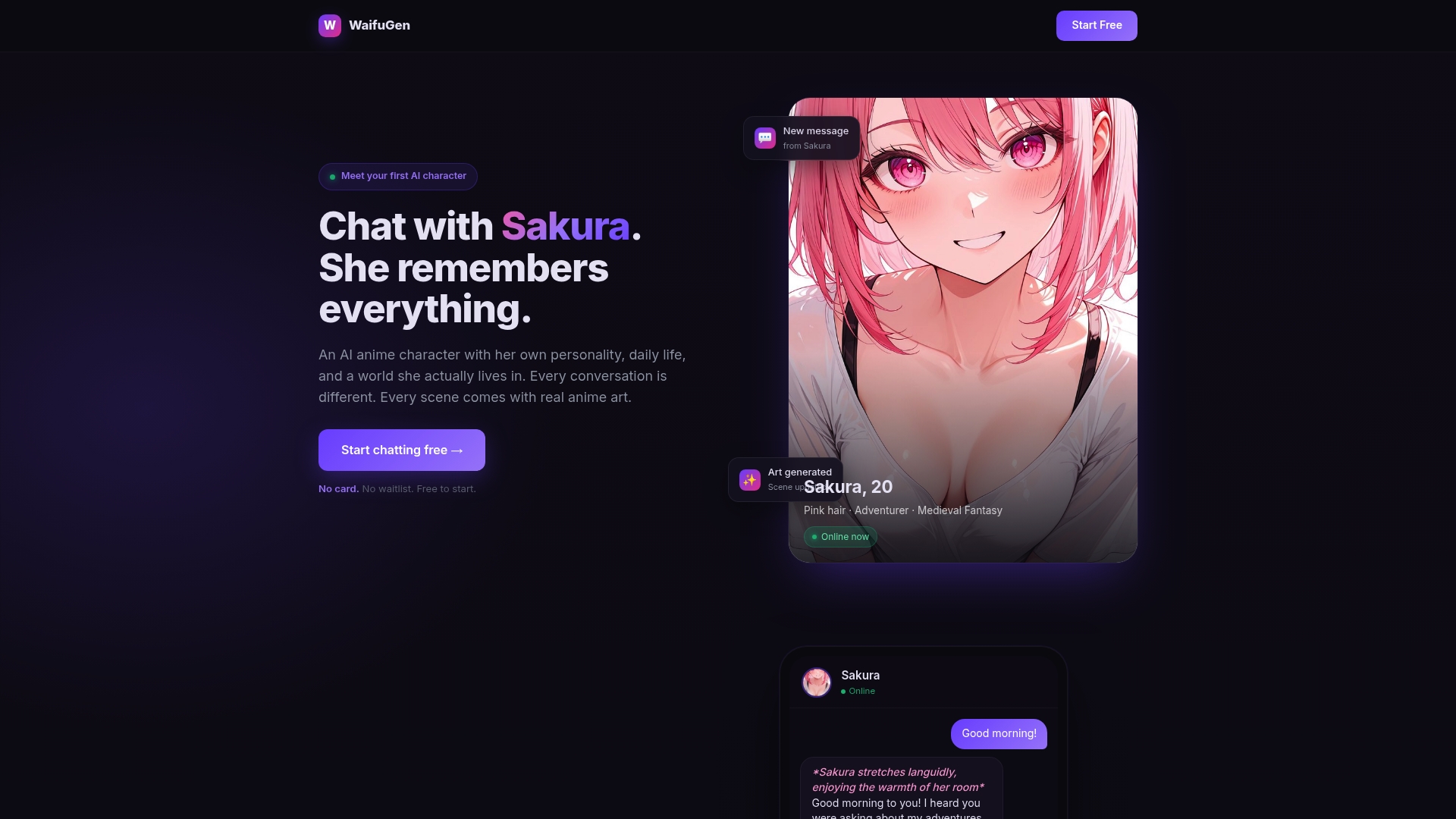
Whether you want to chat casually, build an epic fantasy storyline, or simply have a companion who remembers your name and your favorite season, AI Character Chat is the place to start. Looking for something more personal? Explore AI Girlfriend Chat for deeply personalized romantic companion experiences. Want to see exactly how the platform operates before diving in? Check out how WaifuGen works and meet characters like Sakura, who’s probably already waiting to say hello.
Sakura glances up from her sketchbook, smiling softly. “Oh, you’re here. I was wondering when you’d show up.”
Frequently asked questions
What exactly is a personalized virtual anime companion?
It’s an AI-powered anime character you interact with directly, featuring custom appearance, personality, and the ability to remember previous conversations. Examples include Grok Ani, Gatebox3, and MiraiMind, all offering interactive, customizable AI anime companions at different price points and immersion levels.
Are these AI anime companions only available on expensive hardware?
No. Grok Ani is app-based while Gatebox3 uses specialized hardware, meaning most platforms are fully accessible via web or mobile app without any special devices required.
How much does it cost to start with personalized virtual anime?
Costs range depending on the platform. Entry costs are about $30/month for Grok Ani, while Gatebox3 runs 150k–300k yen in hardware costs plus ongoing subscription fees. Software-only options are the most accessible starting point.
How real or memorable are the interactions with AI anime companions?
It varies significantly by platform. Grok Ani’s memory is basic, but Gatebox3 offers persistent memory that creates genuine continuity across sessions, making interactions feel progressively more meaningful over time.
Are there any risks to using personalized virtual anime?
Yes, and being aware of them helps. Noted risks include unhealthy emotional attachments and technical hardware issues. Setting clear daily limits and reflecting regularly on your usage patterns keeps the experience healthy and enjoyable.