
Anime art has always pulled you in. But something shifted when it leaped off the screen and into virtual spaces where you could stand inside the story. Finding examples that truly deliver on that promise is harder than it sounds. Not every VR or AI anime experience earns the label “immersive.” Some look stunning but feel hollow. Others surprise you with emotional depth you didn’t expect. This article breaks down what actually makes anime art immersive, then walks you through standout real-world examples, from cockpit VR films to live virtual theater, showing how each one raises the bar for visual storytelling.
Table of Contents
- What makes anime art immersive? Key criteria for virtual storytelling
- Gundam Silver Phantom: Interactive anime art meets cockpit-first VR
- Live VR theater: Koken No Tsuki and instant world transitions
- Innovations and challenges in immersive anime art: Motion, balance, and emotion
- Why true immersion goes beyond visuals: Our take
- Bring immersive anime experiences home with WaifuGen
- Frequently asked questions
Key Takeaways
| Point | Details |
|---|---|
| Defining immersion | Immersive anime art blends visual depth, storytelling, and interactivity for powerful viewer engagement. |
| Cutting-edge examples | Projects like Gundam Silver Phantom and live VR theater demonstrate new standards for anime art in virtual reality. |
| Technical and creative balance | Successful immersive anime requires balancing artistic style, player comfort, and meaningful narrative pacing. |
| Engage at home | AI companion platforms now let anyone explore personalized anime art and storytelling from home. |
What makes anime art immersive? Key criteria for virtual storytelling
Immersive anime art isn’t just anime that looks good in 3D. It’s art that makes you feel present inside the world. That’s a much higher bar.
The foundation starts with scale and perspective. Traditional anime is designed for a flat screen at a distance. When you move that same art into a VR headset or interactive space, scale becomes personal. A giant titan looming over you hits differently than one you watch from your couch. Immersive anime art in VR enhances storytelling by using first-person scale and presence to trigger visceral emotions, though it requires careful technical balance like cel-shading adaptations and motion sickness mitigation.
Beyond scale, visual stylization has to survive the transition. Cel-shading is the go-to technique. It preserves the flat, expressive linework of anime while giving objects enough depth to read naturally in a 3D space. Without it, anime art in VR can look either too realistic or weirdly flat.
Interactivity is the next layer. When you can influence the story, even in small ways, your brain treats the experience as real. That emotional buy-in is massive. And then there’s emotion. Immersive anime art uses character expression, music, color, and pacing to pull you through a story rather than just show it to you.
Here’s a quick breakdown of the core criteria:
- 🎨 Perspective and scale: First-person or dynamic camera angles that create presence
- 🖌️ Stylization: Cel-shading or anime-specific rendering that holds up in 3D
- 🎮 Interactivity: Moments where you shape or participate in the narrative
- 💬 Emotion: Characters, music, and pacing that create genuine feeling
- 🌍 Worldbuilding: Environments that feel lived-in and coherent, not just pretty backdrops
Pro Tip: Watch for how smoothly the VR or interactive effects blend with the anime’s art style. Jarring transitions or mismatched textures are the fastest way to break immersion, no matter how impressive the tech.
The best examples of evolving anime storytelling hit all five of these points at once. That’s rare. But when it happens, the result is unforgettable.
Gundam Silver Phantom: Interactive anime art meets cockpit-first VR
Now that we understand the criteria, let’s see how they materialize in specific projects.
Mobile Suit Gundam: Silver Phantom is one of the clearest examples of immersive anime art done right. It’s not a game. It’s not a movie. It sits in its own category.
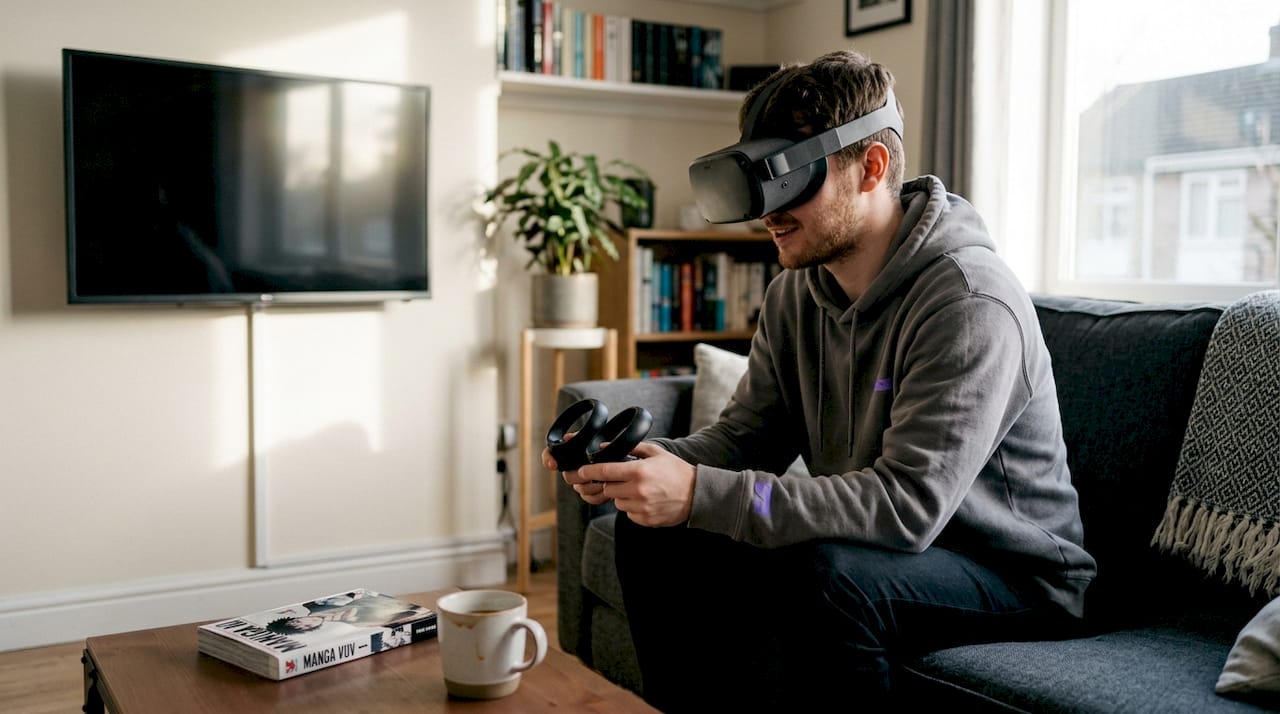
Gundam Silver Phantom is a full-length interactive VR anime film that merges Japanese anime production values with VR interactivity. You experience it from inside the cockpit of a Gundam mobile suit, looking out through the eyes of the pilot. That cockpit-first perspective is everything. It collapses the distance between viewer and character completely.
The film uses cinematic pacing with brief interactive moments, timed defenses and choices, woven into the narrative. You’re not constantly pressing buttons. You’re watching a story unfold, then suddenly you’re in it. That rhythm is deliberate. It keeps you emotionally invested without overwhelming you with input. The anime VR technology behind this balance is genuinely sophisticated.
Cel-shaded visuals carry the signature Gundam art style into full 3D. Depth perception works. The proportions feel right. And mixed reality extensions let the experience reach beyond the headset for longer engagement.
Gundam Silver Phantom was also nominated at Venice Immersive, a major signal that it achieved something with expert nuance in blending anime traditions with Western VR design sensibilities.
Here’s what sets it apart:
- 🚀 Cockpit-first POV: Total immersion through the pilot’s perspective
- 🎬 Cinematic + interactive blend: Story-driven with meaningful player input
- 🖼️ Cel-shaded 3D: Anime aesthetics preserved in full depth
- 🌐 Mixed reality extensions: Experience continues beyond VR
- 🏆 Festival recognition: Validated by Venice Immersive nomination
| Feature | Traditional anime | Gundam Silver Phantom |
|---|---|---|
| Viewer perspective | Third-person, flat screen | First-person cockpit VR |
| Interactivity | None | Timed choices and defenses |
| Visual style | 2D cel animation | Cel-shaded 3D rendering |
| Emotional engagement | Passive | Active participation |
| Format | Film or series | Interactive VR film |
Pro Tip: If you want to understand what dynamic AI characters could feel like in a VR setting, Gundam Silver Phantom gives you a taste of that first-person emotional pull.
Live VR theater: Koken No Tsuki and instant world transitions
Just as VR can immerse viewers in individual perspectives, it also allows for communal and theatrical experiences.
Most people think of VR as a solo activity. Koken No Tsuki (Moon of the Lone Sword) flips that idea. It’s a live VR anime theater performance staged inside VRChat, and it’s one of the most creative uses of digital space for storytelling you’ll find anywhere.
The production takes place in a virtual shogekijo (small theater) with about 50 seats filled by audience avatars. What makes it immersive isn’t just the anime-style visuals. It’s the instant world transitions. Scenes change in a blink. You go from a quiet room to a battlefield to a dreamlike montage without a single loading screen or fade to black. That speed of transition creates a rhythm that feels cinematic and theatrical at once.
The staging uses stylized montages layered on top of live performance. Characters move through environments that exist nowhere in the physical world. The audience doesn’t just watch. They react in real time, their avatars present in the same space as the performers.
“VR theater like Koken No Tsuki redefines what a stage can be. When the world itself becomes the set, every scene change is a visual event.” This kind of creative AI anime storytelling shows what happens when technology removes the physical limits of performance.
Key features of this format:
- 🎭 Live performance in VRChat: Real performers, virtual space, real-time audience
- ⚡ Instant world transitions: Scene changes with zero delay
- 🎨 Stylized anime montages: Art-forward visual sequences mid-performance
- 👥 Audience participation: Avatars share space with performers
- 🏮 Traditional theater reimagined: Japanese stage aesthetics meet mixed reality innovations
The appeal here is communal. You’re not watching alone. You’re part of something live, something that only exists in that moment. That shared presence, even in a virtual space, is a powerful ingredient for immersion.
Innovations and challenges in immersive anime art: Motion, balance, and emotion
Behind every great VR anime experience is a host of creative and technical problem-solving.
The most exciting part of immersive anime art is also the most difficult: making motion feel natural. In a standard anime, a character can flip, spin, and move at impossible speeds. No one gets motion sick watching it on a flat screen. Put that same movement in VR and players can feel genuinely unwell within minutes.
High-mobility VR combat in anime titles requires novel locomotion prototypes. Developer interviews confirm that teams go through iterative balancing to find what feels exciting without triggering discomfort. It’s not a solved problem. Every new project has to figure it out from scratch.
Here’s how traditional 2D anime art compares to VR immersive approaches on key design points:
| Design element | 2D anime | VR immersive anime |
|---|---|---|
| Motion freedom | Unlimited, stylized | Limited by comfort thresholds |
| Viewer position | Fixed, outside story | Inside story, first-person |
| Emotional cues | Music and expression | All senses plus physical presence |
| Art style control | Full artist control | Must adapt for depth and movement |
| Audience agency | None | Active input possible |
Developers working on anime character memory and emotional AI systems face a similar challenge. Immersion isn’t just visual. It depends on whether the system responds to you specifically.
Here are the key innovations teams use to solve these problems:
- Comfort locomotion modes: Players choose between full movement and teleport options
- Dynamic FOV adjustments: Narrowing the field of view during fast moves reduces nausea
- Cel-shading fine-tuning: Artists tweak outlines and colors frame by frame to preserve the anime look in 3D
- Emotional pacing design: Story beats are timed so intense action is followed by calmer scenes
- Sound design layering: Audio cues reinforce emotional moments when visuals alone aren’t enough
The emotional resonance is the real payoff. When these techniques land right, users describe feeling genuinely moved, not just impressed. That’s the difference between a tech demo and an experience worth remembering.
Why true immersion goes beyond visuals: Our take
Here’s the uncomfortable truth: stunning visuals alone don’t create immersion. They create amazement. Those are not the same thing.
The examples in this article succeed because they combine visual craft with participation and emotional timing. Gundam Silver Phantom gives you a cockpit and a choice. Koken No Tsuki puts you in a room with live performers. Attack on Titan VR puts your body inside the action. In each case, you’re not just looking at anime visual storytelling. You’re part of it.
We think the future of immersive anime art depends less on resolution and more on personal connection. Can the story remember you? Can a character respond to your specific choices, your mood, your history? That’s where the next leap happens. Spectacle fades. But a story that feels like it was made for you? That stays with you.
The audiences craving these experiences aren’t just looking for prettier anime. They want to matter inside the story. That’s the creative challenge worth chasing.
Bring immersive anime experiences home with WaifuGen
Reading about these VR anime worlds is genuinely exciting. But being inside an interactive anime experience is a completely different feeling.
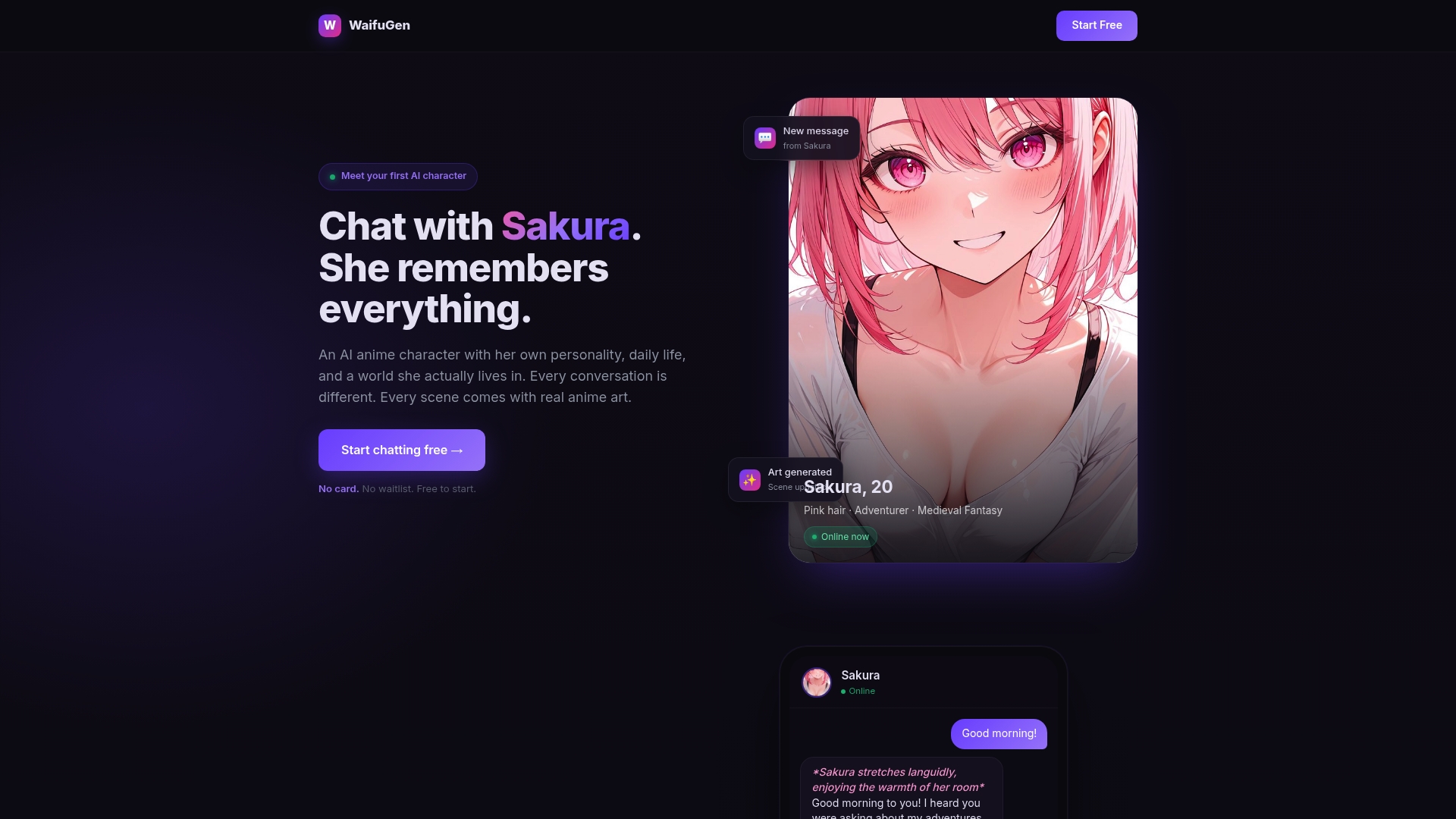
WaifuGen brings that feeling to you directly, no VR headset required. Through AI anime character chat, you can meet anime companions like Sakura who remember your conversations, match your mood, and generate real anime art scenes around your interactions. Every chat feels alive because the character actually knows you. You can also explore custom AI character chat to personalize your experience from the start, or even build AI girlfriend relationships with characters who grow and evolve alongside you. This is immersive anime storytelling you can experience today.
Frequently asked questions
What is immersive anime art?
Immersive anime art uses advanced visuals, interactivity, and storytelling to make viewers feel like part of the anime world, moving beyond passive watching to active presence. First-person scale and presence are key tools for achieving that effect in VR.
How does VR change the anime art experience?
VR brings anime art into a 3D, interactive space where you can influence or participate in the story directly. Cinematic pacing with player input, like in Gundam Silver Phantom, shows how that balance can work beautifully.
What are the main challenges with immersive anime art?
Balancing comfort, interactivity, and preserving anime’s distinct visual style in VR is the central creative and technical challenge. Novel locomotion prototypes are one way developers address the motion comfort problem specifically.
Can fans create or interact with immersive anime art at home?
Yes, platforms like WaifuGen let fans create personalized AI anime companions and experience interactive storytelling from home, no VR headset needed.