Anime Storytelling Tips for Creators in 2026
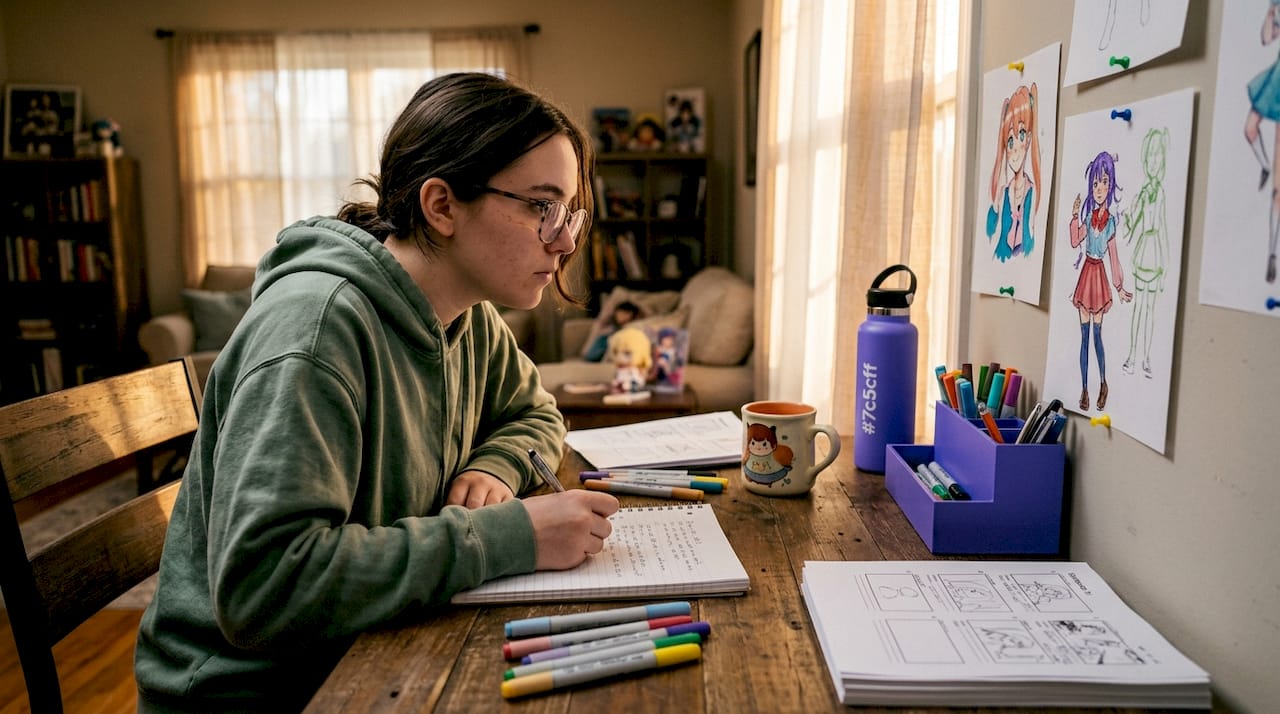
By The WaifuGen Team · Published June 2026
Most aspiring anime creators hit the same wall: they have a cool world, a great power system, maybe even a killer protagonist design, and then the story falls flat. The problem is almost never the concept. It’s the emotional architecture underneath it. Mastering anime storytelling tips means learning to build stories from the inside out, starting with feeling and working toward plot. These ten practical tips cover the full anime storytelling elements list, from protagonist design to first episode structure, so you can stop staring at a blank page and start building something that actually hits.
Table of Contents
- Key takeaways
- 1. Start with feeling, not genre
- 2. Design your protagonist with internal architecture
- 3. Choose a story structure that fits your wound
- 4. Use visual storytelling to dramatize internal change
- 5. Earn your character’s growth with setbacks
- 6. Pace your story with emotional intention
- 7. Hook viewers in your first episode
- My honest take on what actually matters
- Bring your anime characters to life with WaifuGen
- FAQ
Key takeaways
| Point | Details |
|---|---|
| Start with emotion, not genre | Decide the feeling you want your audience to experience before choosing plot or setting. |
| Build protagonists with three layers | Every strong anime lead needs a concrete desire, an emotional wound, and a ghost belief driving their arc. |
| Match structure to your story’s heart | Choose a framework like the hero’s journey or found family based on your protagonist’s internal wound, not trends. |
| Show growth visually and behaviorally | Use color, framing, and behavioral setbacks to dramatize character change without explaining it through dialogue. |
| Hook viewers in episode one | Establish your protagonist’s want, world, and wound before the credits roll, and end on a compelling question. |
1. Start with feeling, not genre
This is the single most overlooked anime storytelling tip for beginners. Before you pick a genre, before you decide if your story is a shonen or a slice-of-life, ask yourself one question: what do you want your audience to feel when they finish an episode?
Story planning from feeling means genre and plot scenes align naturally to achieve that emotion. If the feeling is “bittersweet longing,” you’re probably writing a romance or coming-of-age story with quiet, lingering moments. If the feeling is “triumphant relief after crushing doubt,” you’re writing action with real stakes and earned victories. Genre becomes a vehicle, not a starting point.

Writers who pick genre first without emotional clarity tend to produce technically correct but emotionally hollow stories. They hit the beats of a tournament arc without ever making you care who wins. Start with the feeling. Everything else will follow.
Pro Tip: Write one sentence that describes the exact emotion you want viewers to feel at the end of your season finale. Pin it somewhere visible. Every scene you write should either build toward or complicate that feeling.
2. Design your protagonist with internal architecture
A strong anime protagonist needs more than a cool goal. Three internal elements define a truly compelling lead:
- Concrete desire: What does your protagonist actively seek or protect? This should be specific and visible. Not “wants to be strong” but “wants to protect his younger sister from the guild that destroyed his village.”
- Emotional wound: A past experience that shaped how they see the world, usually incorrectly. The wound makes them act in ways that hurt themselves or others, and it drives their blind spots.
- Ghost belief: The story the protagonist tells themselves because of the wound. Something like “I can only trust myself” or “showing weakness invites betrayal.” This belief creates the internal conflict that the entire arc resolves.
Name all three before you write a single scene. This is your character’s internal blueprint. It tells you how they’ll react under pressure, where they’ll fail, and what change looks like for them.
Your supporting cast should follow the same logic. Every character who matters should have their own wants and ghosts. They’re not props for your protagonist. They’re people reacting to their own wounds, and that friction is what creates top anime character personality traits worth writing about.
Pro Tip: Write a ghost belief for your protagonist and then write the exact opposite belief as a statement. The arc of your story is the journey from one to the other.
3. Choose a story structure that fits your wound
Once you know your protagonist’s wound and ghost belief, you can choose a framework that fits them. Here’s how the most popular anime story structures compare:
| Framework | Best for | Emotional payoff | Beginner friendly? |
|---|---|---|---|
| Hero’s journey | Protagonists with a clear wound and a call to change | Triumphant transformation | Yes |
| Found family arc | Protagonists who believe they don’t deserve connection | Belonging and trust | Yes |
| Tournament arc | Mid-season pacing and testing character growth under pressure | Competitive catharsis | Moderate |
| Revenge arc | Protagonists consumed by a defining loss | Complex moral reckoning | Risky for beginners |
The hero’s journey is beginner-friendly because it maps major story beats to character decisions, giving you clear pacing rules to follow. The ordeal should begin no later than two thirds into your season, and the doubt phase before the climax should feel genuinely threatening, not decorative.
Revenge arcs are seductive but punishing for newer writers. Without a well-executed doubt phase, where your protagonist seriously questions whether revenge is worth it, the arc reads as one-note. Found family arcs distribute emotional weight across the ensemble, which means your story can sustain momentum even when your protagonist is stuck.
Using a familiar framework does not mean your story feels generic. The structure is scaffolding. What makes it unique is the specific wound and ghost belief underneath.
4. Use visual storytelling to dramatize internal change
Anime has a tool that prose writers envy: the ability to show psychological change through visual metaphor without a single word of dialogue. Learning to think visually is one of the most powerful anime narrative techniques you can develop.
Visual storytelling techniques like color, framing, and symbolic imagery dramatize internal change in ways that feel immediate and emotional. A confident character is framed from below, making them appear taller. A depressed or wounded character is surrounded by shadows and appears physically smaller in the frame. These aren’t tricks. They’re a visual language your audience reads instinctively.
Here are specific techniques to consider when writing for anime:
- Color palette shifts: Warm, saturated colors for a character’s emotional openness; cold, desaturated tones when they’re retreating into their wound.
- Posture and body language: A character who stops covering their scar is showing growth without saying a word.
- Recurring symbolic imagery: If rain appears in your protagonist’s lowest moments, sunlight in their breakthroughs, the audience builds an emotional association without realizing it.
- Framing asymmetry: Isolating a character on one side of an empty frame communicates loneliness more immediately than any internal monologue.
Check out the visual storytelling guide on the WaifuGen blog for a deeper breakdown of how scene composition tracks character psychology across an episode.
5. Earn your character’s growth with setbacks
This is where a lot of well-structured anime stories still fall apart. Effective character growth involves setbacks and permanent impact. It should feel earned, not handed out like a power-up from a vending machine.
Growth in anime storytelling means the character’s worldview changes, not just their skill level. The protagonist who believed “I can only trust myself” should have at least one moment where that belief almost destroys everything before they begin to let it go. And the change should carry visible weight in subsequent scenes. Other characters should react differently to them. Their posture should shift. Something should be permanently different.
Doubt and regression are not signs of weak writing. They’re the mechanics of earned transformation. Plan your protagonist’s lowest point before you write their breakthrough. The depth of the valley determines the height of the climb.
6. Pace your story with emotional intention
Cozy pacing in slice-of-life anime gets misunderstood constantly. People think it means slow. It doesn’t. It means deliberate. Every lingering scene should reveal something new about a character’s emotional state or deepen an ambiguity the audience is already holding.
A slow scene that teaches you nothing about the characters is just slow. A slow scene where two characters talk about lunch while clearly avoiding talking about something else entirely? That’s cozy pacing doing emotional work.
For episodic slice-of-life stories, use what’s called a “seasonal shape.” Structure your series around a natural container like a school year, a summer break, or a festival season. This gives your story built-in forward momentum and a clock the audience feels without needing a villain countdown. The WaifuGen blog on slice-of-life anime goes deep on this approach if you want to explore it further.
7. Hook viewers in your first episode
Your first episode is doing heavy lifting. It needs to establish your protagonist’s want, world, and wound all before the credits roll, and it needs to do it without feeling like a checklist.
Here’s an anime storytelling step by step approach for episode one:
- Open in ordinary life. Show your protagonist’s wound through behavior, not exposition. If they don’t trust people, show them sitting alone even when there’s a group nearby. Don’t explain their backstory yet.
- Establish what they want. Make it concrete and visible within the first few minutes. What are they actively doing or protecting?
- Introduce the disruption. Something happens that makes ordinary life impossible to maintain. The call to adventure, the inciting incident, the thing that cracks the shell.
- End on a question. Not a cliffhanger for its own sake. A question that makes the audience genuinely uncertain about how things will resolve. Ending on a compelling question drives curiosity into the next episode better than any explosion.
Pro Tip: Start with the smallest possible scope: one character, one question, one episode. You can expand the world later. You can’t recover a first episode that lost the audience before it found its own voice.
Encoding the protagonist’s wound behaviorally in the first episode, rather than explaining it outright, is one of the most effective techniques in professional anime writing. Trust your audience to read behavior. They will.
My honest take on what actually matters
I’ve read a lot of anime storytelling guides, and most of them spend too much time on plot mechanics. The flashy stuff. The twist reveals and power escalation systems. Here’s what I’ve actually found matters more: the internal work.
When I analyze the anime stories that stay with people for years, the ones that get rewatched and dissected and written about long after they air, the common thread is almost never the most inventive plot. It’s the most honest character. A protagonist whose wound feels real. A ghost belief the audience secretly recognizes in themselves.
What I’ve learned is that frameworks are permission structures, not cages. The hero’s journey doesn’t constrain your story. It frees you from spending creative energy on basic pacing problems so you can spend it on what only you can write: the specific emotional truth inside your protagonist. Experiment within the structure. Push against it deliberately. But do the internal character work first. That’s where the story lives.
— Roman
Bring your anime characters to life with WaifuGen
You’ve got the storytelling framework. Now imagine being able to test your characters in real conversations before you ever write a full scene.
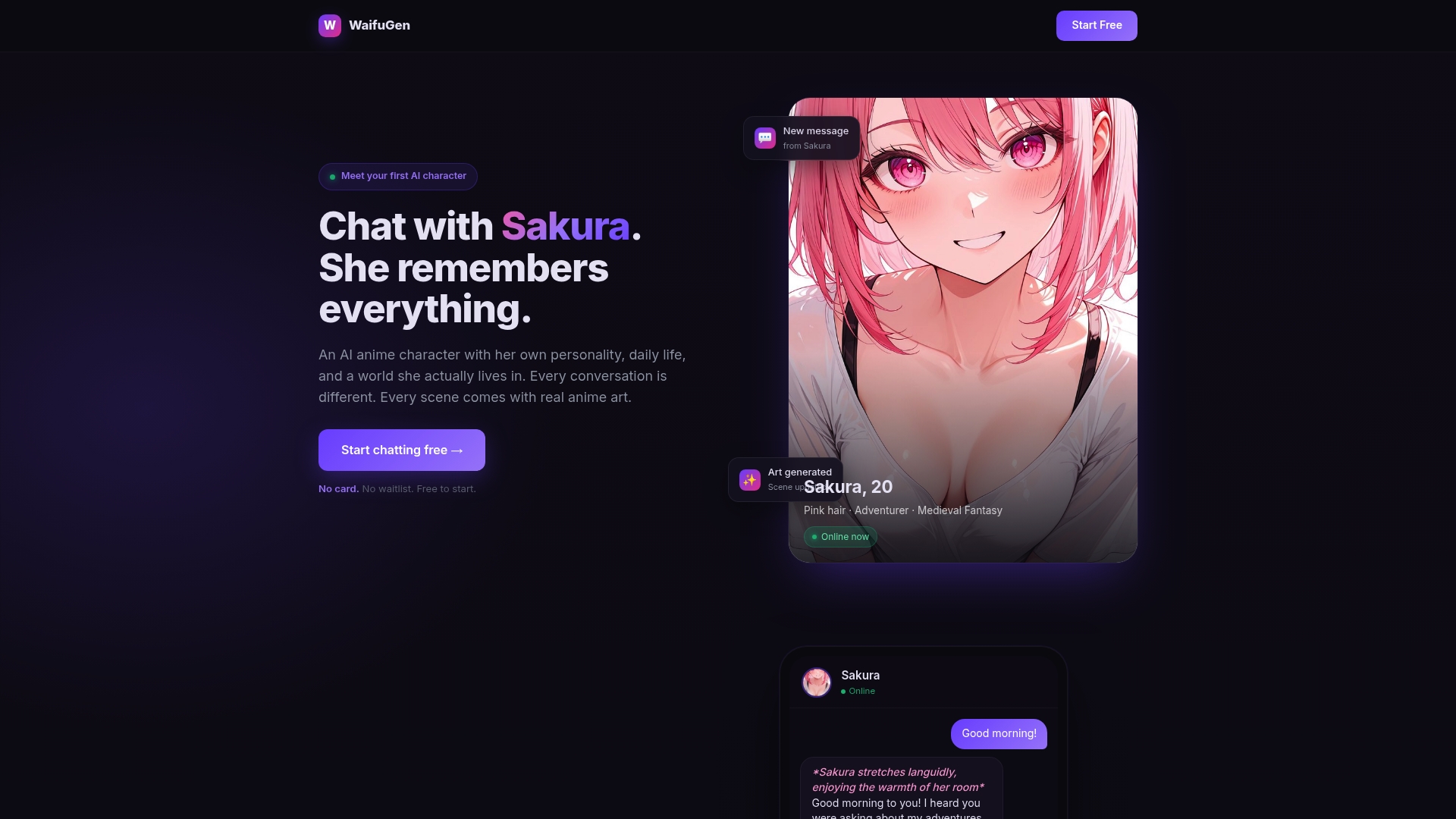
WaifuGen lets you build custom AI characters with memory so you can explore how your protagonist or supporting cast actually talks, reacts, and evolves across interactions. Does your character’s ghost belief show up naturally in their dialogue? Does their mood shift when the topic hits their wound? You can find out before you commit it to the page. It’s like having a live read with your characters, powered by real anime art and dynamic personality simulation. Whether you’re stress-testing character dynamics or just getting inspired, WaifuGen is a genuinely fun tool for any anime creator’s workflow.
FAQ
What are the most important anime storytelling tips for beginners?
Start with the feeling you want your audience to experience, then build your protagonist with a concrete desire, emotional wound, and ghost belief. Choose a beginner-friendly structure like the hero’s journey or found family arc to frame those elements.
How do character arcs in anime differ from Western storytelling?
Anime character arcs often prioritize internal worldview change over external achievement, using visual metaphors, setbacks, and earned moments of doubt to show growth rather than relying on dialogue-heavy exposition.
What is a ghost belief in anime protagonist design?
A ghost belief is the false story a protagonist tells themselves because of their emotional wound, such as “I can only trust myself.” Resolving this belief is typically the emotional spine of the entire story arc.
How long should a first anime episode be in terms of story setup?
A first episode should establish the protagonist’s want, world, and wound before it ends, regardless of runtime. The final beat should be a compelling open question, not a complete resolution, to pull viewers into the next episode.
What is cozy pacing in anime storytelling?
Cozy pacing, common in slice-of-life anime, means deliberate pacing where every slow scene does emotional work by revealing character insight or deepening ambiguity. It is not simply slow pacing without purpose.