Anime outfits in AI storytelling: why they matter
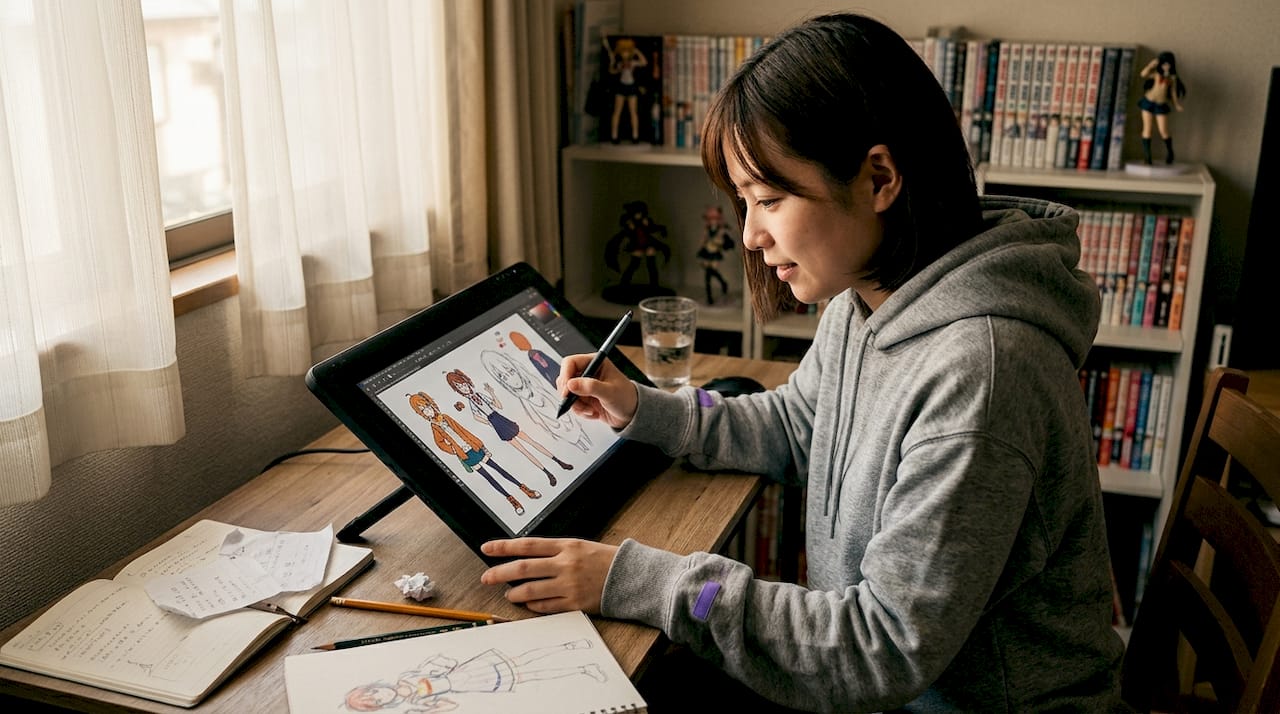
Anime fans know that a great outfit is never just clothing. It’s a story told in fabric, color, and accessories. But here’s the thing most people miss: outfits in anime are one of the most powerful storytelling tools in the medium, and AI is now transforming how we create, use, and interact with them. Whether you’re building an original character or chatting with an AI companion, the outfit shapes the entire experience. This guide breaks down why anime outfits matter so deeply, how AI generates and maintains them, and what this means for immersive, personalized storytelling.
Table of Contents
- Why outfits matter in anime storytelling
- AI-powered anime outfit generation: Tools and techniques
- Advanced AI methodology for anime outfit creation
- Outfit consistency and character development in interactive AI anime
- Why AI-driven outfits are rewriting the rules of anime character immersion
- Explore AI anime outfit creation with WaifuGen
- Frequently asked questions
Key Takeaways
| Point | Details |
|---|---|
| Outfits signal character growth | Anime outfits visually mark pivotal moments and emotional changes in story arcs. |
| AI enhances outfit creativity | AI generators enable fans and creators to design unique costumes quickly for new and existing characters. |
| Consistency is crucial for immersion | Maintaining outfit continuity ensures believable character development in interactive AI anime experiences. |
| Interactive customization deepens connection | Users can personalize anime character outfits and see how changes impact the storyline in real time. |
Why outfits matter in anime storytelling
In anime, what a character wears is rarely random. Every belt, color choice, and accessory carries meaning. Outfits function as a visual language, communicating who a character is, what they believe in, and where they’re headed, often before a single line of dialogue.
Think about it this way: when you see a character switch from a dark, jagged costume to something cleaner and more open, you already sense growth. That’s the power of visual storytelling in anime. The outfit tells you what words sometimes can’t.
“Costume is character. In anime, how someone dresses is often a window into their soul, their past, and their future.”
Here are some of the ways outfits function as storytelling devices:
- Color symbolism: Red can signal passion or danger. White often represents purity or a fresh start. Blue is tied to calm, reason, or isolation.
- Accessories as foreshadowing: A specific weapon, badge, or piece of jewelry often hints at future plot points or hidden loyalties.
- Costume wear and tear: A torn outfit after a battle visually communicates struggle and sacrifice without a single word.
- Uniform vs. casual wear: The contrast between a character’s uniform and their off-duty clothes reveals their private self.
One of the most striking examples of outfit-as-character-development comes from My Hero Academia. Shoto Todoroki’s costume change shifts from an ice-covered design that symbolizes his resentment and inner conflict to a mature hero costume representing independence and reconciliation. That single visual shift tells his entire emotional arc.
📊 Statistic callout: Studies on media and narrative design consistently show that visual design elements like clothing color and silhouette are processed by viewers faster than spoken dialogue, making them some of the most efficient storytelling tools available.
This is exactly why outfit design matters so much in AI-powered anime experiences. If the outfit doesn’t evolve with the character, the story feels flat. With this understanding of narrative symbolism, let’s see how AI technology brings new possibilities for outfit design.
AI-powered anime outfit generation: Tools and techniques
AI has quietly become one of the most exciting tools for anime creators and fans. And outfit generation is one of its most impressive capabilities. You can now describe a character’s mood, backstory, or aesthetic and get a fully realized costume in seconds.
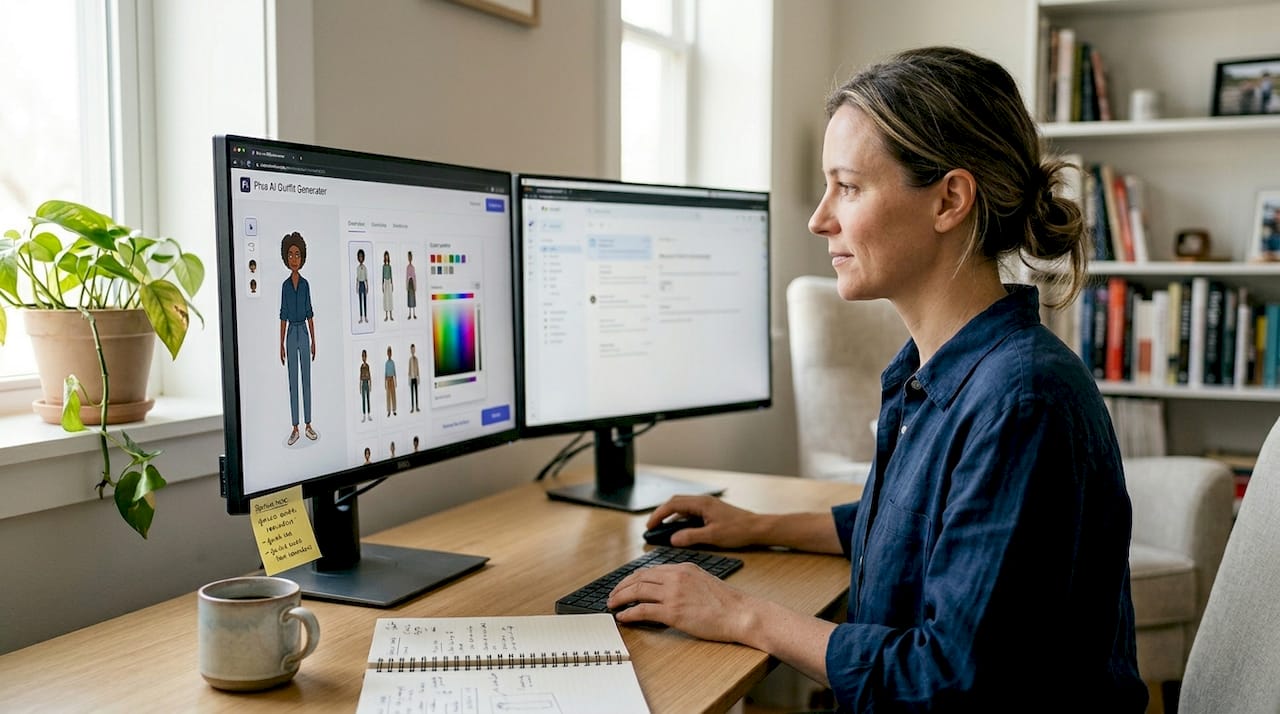
Platforms like Pixa and Dzine AI are leading this space with different approaches. AI tools enable outfit generation for anime characters, creating custom clothing from text descriptions for original characters, fan art projects, and interactive experiences. Dzine AI, by contrast, lets you style outfits after the character has already been generated, giving you more flexibility in layering design decisions.
Here’s a quick comparison of how these tools differ:
| Feature | Pixa | Dzine AI |
|---|---|---|
| Input method | Text description | Post-character generation |
| Best for | OCs and fan art | Style iteration |
| Workflow | Text to costume | Style overlay |
| Customization | High via prompts | High via visual tools |
The practical workflow for most users looks something like this:
- Describe your character’s personality and role. Are they a guild healer or a rogue adventurer? This shapes the outfit’s function.
- Input visual keywords. Think color palette, fabric type, and cultural influence.
- Generate and review. AI gives you a starting point. You iterate from there.
- Refine based on story context. Does the outfit match where the character is emotionally right now?
Pro Tip: Use AI to rapidly iterate designs. Try generating the same character in three different emotional states and see how the outfit shifts. This is a brilliant way to plan future story arcs and deepen your understanding of immersive anime AI storytelling.
The key insight here is that AI doesn’t just save time. It opens up creative possibilities that would take hours to sketch manually. And for fans who want deeper anime chats with AI companions, having a well-designed outfit in place makes every scene feel more real. Now that we see how AI generates outfits, let’s look at the advanced AI technologies shaping them for deeper immersion.
Advanced AI methodology for anime outfit creation
Behind the scenes, some genuinely impressive technology is making AI anime outfits more detailed, consistent, and expressive than ever before.
One of the most exciting breakthroughs is text-guided texture generation. Research on Make-It-Vivid details how AI can generate UV textures (the maps that wrap around 3D models) for biped cartoon outfits using nothing but a text prompt. In testing across 300 prompts, this method outperformed baseline models like LatenPaint and Fantasia3D in texture quality. That’s a significant leap for interactive anime character creation.
Here’s what advanced AI outfit pipelines can now do:
- Render fabric textures that look distinct, whether it’s worn leather, silk, or enchanted cloth
- Adapt outfit details based on contextual cues like setting, season, or emotional state
- Apply consistent color grading across lighting changes in dynamic scenes
- Support real-time customization without breaking visual coherence
Machine learning frameworks are also improving how outfits interact with character movement. This means an outfit doesn’t just look good in a static image. It behaves naturally when a character moves, gestures, or reacts emotionally.
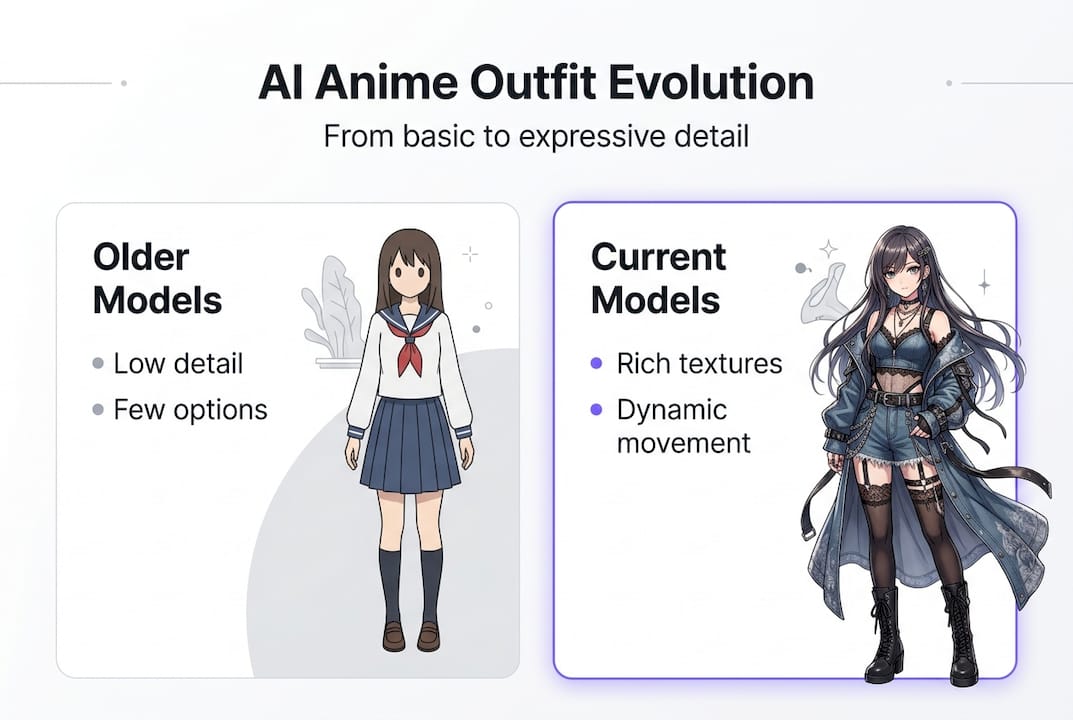
| Capability | Older AI models | Current AI models |
|---|---|---|
| Texture detail | Low to medium | High, text-guided |
| Real-time changes | Limited | Increasingly supported |
| Emotional context | None | Beginning to integrate |
| 3D consistency | Inconsistent | Benchmark-tested |
Pro Tip: If you’re building an AI anime character with a long story arc, integrate outfit design with an AI character memory system. This way, the character’s appearance evolves alongside their personality and experiences, creating seamless continuity across every interaction.
The technology is moving fast. What felt like science fiction two years ago is now a practical tool for fans and developers alike. But consistency across multiple scenes is where things get genuinely complex. But consistency, especially across multiple scenes and dynamic interactions, is a core challenge in AI anime outfit generation.
Outfit consistency and character development in interactive AI anime
Here’s where things get tricky. Generating one great outfit is one thing. Keeping that outfit consistent across dozens of scenes, emotional states, and story beats is a much harder problem.
Consistency matters more than most fans realize. When an AI character’s outfit randomly shifts between scenes, it breaks immersion instantly. You go from invested to confused in seconds. That’s the opposite of what great storytelling is supposed to do.
“Visual consistency is the backbone of character trust. If the outfit keeps changing without reason, the character stops feeling real.”
The good news is that AI developers are making serious progress. Maintaining character consistency in AI-generated anime is challenging, but solutions like character models (Tensor Art, APOB) and video intermediates (Midjourney workflows) are helping multi-scene and interactive experiences stay coherent.
Here’s what good outfit consistency enables in interactive AI anime:
- Stronger emotional connection: Fans recognize and bond with a character’s look over time, the same way they do with canon anime characters
- Meaningful costume changes: When the outfit does change, it reads as intentional and significant
- Better scene transitions: Moving from a casual home setting to a battle scene feels natural when the outfit shift is controlled and purposeful
- Narrative trust: Users stay immersed because visual cues align with the story being told
Stage-based outfit modifications are especially powerful here. Just like anime series plan costume upgrades to mirror character growth, AI platforms can be designed to shift a character’s look in response to story milestones. This is one of the creative uses of AI anime that fans rarely think about until they experience it. And once you do, it’s hard to go back to static designs. You can also enhance AI chat immersion by pairing consistent outfit visuals with dialogue that references the character’s appearance, making interactions feel genuinely alive. With these technical and narrative foundations, let’s examine distinctive editorial perspectives on outfit roles in AI anime.
Why AI-driven outfits are rewriting the rules of anime character immersion
Here’s an opinion worth sitting with: AI hasn’t just made outfit design faster. It’s fundamentally changed who gets to be part of the creative process.
For most of anime’s history, costume design was the work of professional artists with years of training. Fans could appreciate and cosplay outfits, but they couldn’t shape them. AI changes that. Now you can co-create a character’s look, watch it evolve through story choices, and feel genuine ownership over the design.
This creates a feedback loop that traditional anime can’t offer. When you interact with a personalized AI anime character, the outfit becomes an interactive touchpoint, not just a visual detail. You can influence it, change it, and relate to it in real time. That kind of creative ownership deepens immersion in a way that no static screenshot or fan wiki ever could.
The most exciting part isn’t the technology itself. It’s the storytelling possibilities that open up when fans become co-authors of the visual experience. That’s genuinely new territory.
Explore AI anime outfit creation with WaifuGen
You’ve just taken a deep look at why anime outfits matter and how AI is pushing their creative potential forward. Now it’s time to experience it firsthand.
WaifuGen brings all of this together in one place. You can create custom AI anime characters with distinct looks, evolving outfits, and memories that carry across every conversation. Want to jump straight in? Chat with an AI anime companion and see how visual design and storytelling blend into something genuinely immersive. Your character is waiting, outfit and all. ✨
Frequently asked questions
How do outfit changes in AI-generated anime characters impact storytelling?
Outfit changes provide visual cues for character development and can reflect narrative shifts, making storylines more immersive. Just as Shoto Todoroki’s costume shift signals emotional growth in My Hero Academia, AI characters can use the same technique to deepen interactive stories.
Can AI tools create original anime outfits from text or prompts?
Yes, AI outfit generators use text input to design custom costumes for new anime characters, fan art, and interactive experiences. Pixa’s outfit generator is a strong example, turning written descriptions into fully realized anime clothing.
What is the main challenge in AI anime outfit consistency?
Maintaining outfit and character consistency across multiple scenes is difficult, but AI models and workflows are improving this through character templates and intermediates. Tools like Tensor Art and APOB are part of the solution for keeping characters consistent across scenes.
How does AI help fans personalize anime character outfits?
AI allows users to customize outfits easily and see changes reflected instantly in interactive stories or chats, enhancing personal connection. Platforms built around this idea let you shape a character’s look the same way a writer shapes a character’s personality, making the experience genuinely yours.