Customizable AI art for anime fans: Your personalization guide
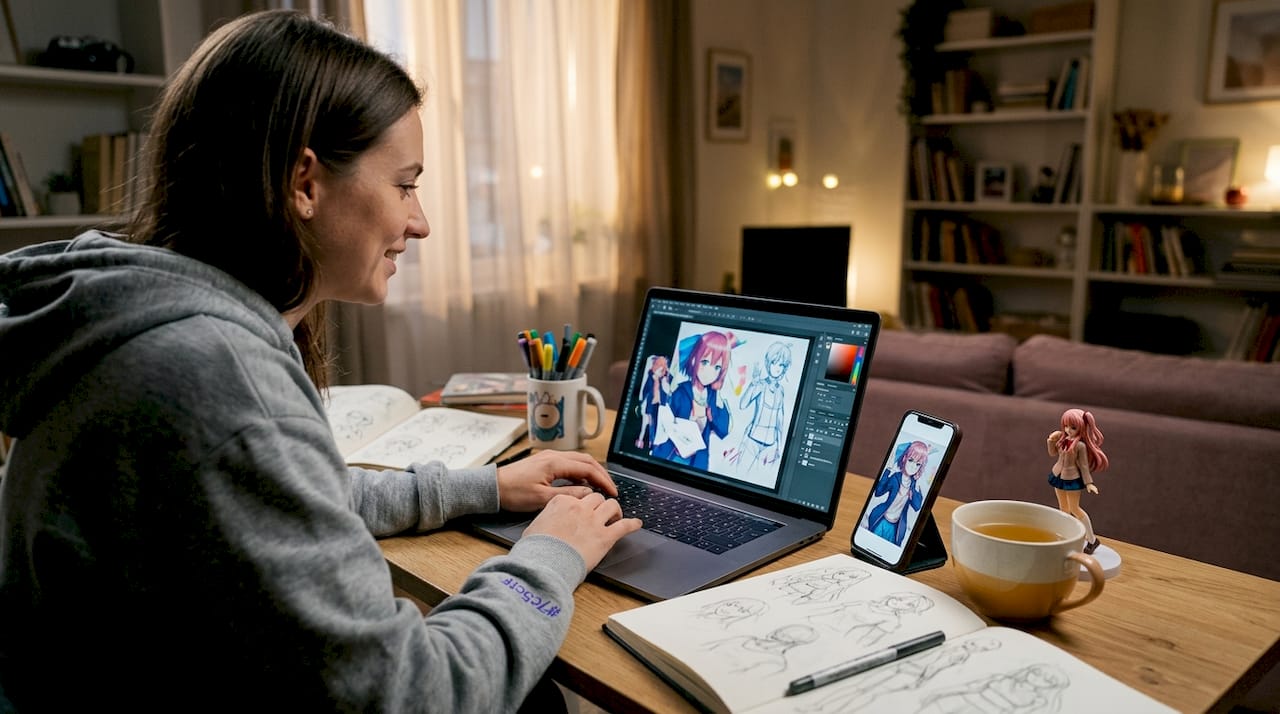
Most people assume AI art is a random image generator. You type something in, you get something out, and that’s the end of it. But that’s a little like saying a guitar is just a plank of wood with strings. The real story is so much more exciting. Customizable AI art gives you genuine creative control over characters, scenes, moods, and even personalities. For anime fans especially, this technology opens up a world of personalized visuals, virtual companions, and interactive stories that feel genuinely yours. Let’s break down what it all means and how you can use it.
Table of Contents
- Defining customizable AI art: Tools, techniques, and anime focus
- Choosing the right AI art tool: Comparing Midjourney, Leonardo, and Stable Diffusion
- Personalizing anime characters: Creating companions, avatars, and story elements
- Common challenges and expert insights: Emotional depth, creativity, and engagement
- Our take: What most anime fans miss about customizable AI art
- Next steps: Create your own AI anime companion
- Frequently asked questions
Key Takeaways
| Point | Details |
|---|---|
| AI empowers personalization | Customizable AI art allows anime fans to actively control everything from style to character traits and story elements. |
| Choose tools wisely | Different AI platforms excel at distinct aspects of anime art customization, so matching your needs to the tool is essential. |
| Emotional engagement possible | AI art can support evolving companions and interactive storytelling, fostering meaningful connections for fans. |
| Expert advice matters | Addressing pitfalls like superficial customization using expert insights leads to deeper and more resonant anime creations. |
Defining customizable AI art: Tools, techniques, and anime focus
With the context set, let’s dive into what makes AI art truly customizable, especially for anime fans.
At its core, customizable AI art is the use of AI algorithms, primarily diffusion models and GANs (Generative Adversarial Networks), to generate, modify, or enhance visual artwork based on user-specified inputs like text prompts, images, styles, and parameters. That definition sounds technical, so let’s make it simple.
Diffusion models work by starting with visual noise and slowly refining it into a coherent image based on your instructions. Think of it like sculpting from a rough stone block. GANs use two competing AI systems: one that creates images and one that judges them, pushing quality higher through constant rivalry. LoRAs (Low-Rank Adaptation models) are smaller, fine-tuned layers you can add on top of a base model to teach it a specific visual style, like a particular anime character’s look or a unique art aesthetic.
For anime fans, this matters a lot. These technologies make it possible to generate images that match the visual language of your favorite anime genres, whether that’s shonen action, magical girl fantasy, or slice-of-life warmth. You can control line weight, color palette, character proportions, and emotional expression. That’s a level of creative freedom that wasn’t accessible to most people just a few years ago.
Here’s a quick overview of how the customization process typically works:
- 🎨 Prompts: You describe what you want in text, including character details, setting, mood, and style.
- 🖌️ Style choices: You select or apply a visual style, often through model selection or LoRA layers.
- ⚙️ Parameters: You adjust settings like guidance scale (how closely the AI follows your prompt) and sampling steps (how refined the output is).
- 🔄 Iteration: You refine your results through multiple rounds of feedback and adjustment.
The key insight is that you are not just a passive viewer. You are a co-creator. Explore the AI art customization options on WaifuGen’s blog to see how this plays out visually in anime-style worlds.
“AI is not replacing the artist. It is amplifying what the artist can do, expanding the possible, and accelerating the journey from imagination to image.” This framing is especially true for anime fans who already have a strong visual vocabulary and deep appreciation for character design.
The creative power is real, and it is in your hands.
Choosing the right AI art tool: Comparing Midjourney, Leonardo, and Stable Diffusion
Now that we understand the foundation, choosing the right tool is crucial for unleashing customization.
Not all AI art tools are built the same way, and the differences matter a lot when your goal is personalized anime art. Based on tool performance comparisons, Midjourney excels in artistic and stylized anime outputs using imaginative prompts, Leonardo.ai delivers strong control, consistency, and game art production speed, while Stable Diffusion offers the deepest full customization through LoRA fine-tuning but requires more technical knowledge.
Here’s a side-by-side look at how these tools stack up for anime fans:
| Feature | Midjourney | Leonardo.ai | Stable Diffusion |
|---|---|---|---|
| Creativity | ⭐⭐⭐⭐⭐ | ⭐⭐⭐⭐ | ⭐⭐⭐⭐ |
| Control | ⭐⭐⭐ | ⭐⭐⭐⭐⭐ | ⭐⭐⭐⭐⭐ |
| Ease of use | ⭐⭐⭐⭐ | ⭐⭐⭐⭐ | ⭐⭐ |
| Customization | ⭐⭐⭐ | ⭐⭐⭐⭐ | ⭐⭐⭐⭐⭐ |
| Speed | ⭐⭐⭐⭐ | ⭐⭐⭐⭐⭐ | ⭐⭐⭐ |
| Best for | Stylized scenes | Consistent characters | Deep fine-tuning |
Anime fans who are just getting started tend to gravitate toward Leonardo.ai. Its workflow is clear, its output is consistent, and it handles character generation in anime style with minimal friction. You can build a recognizable character and keep that look stable across multiple images, which is essential if you want to tell a story or build a companion persona.
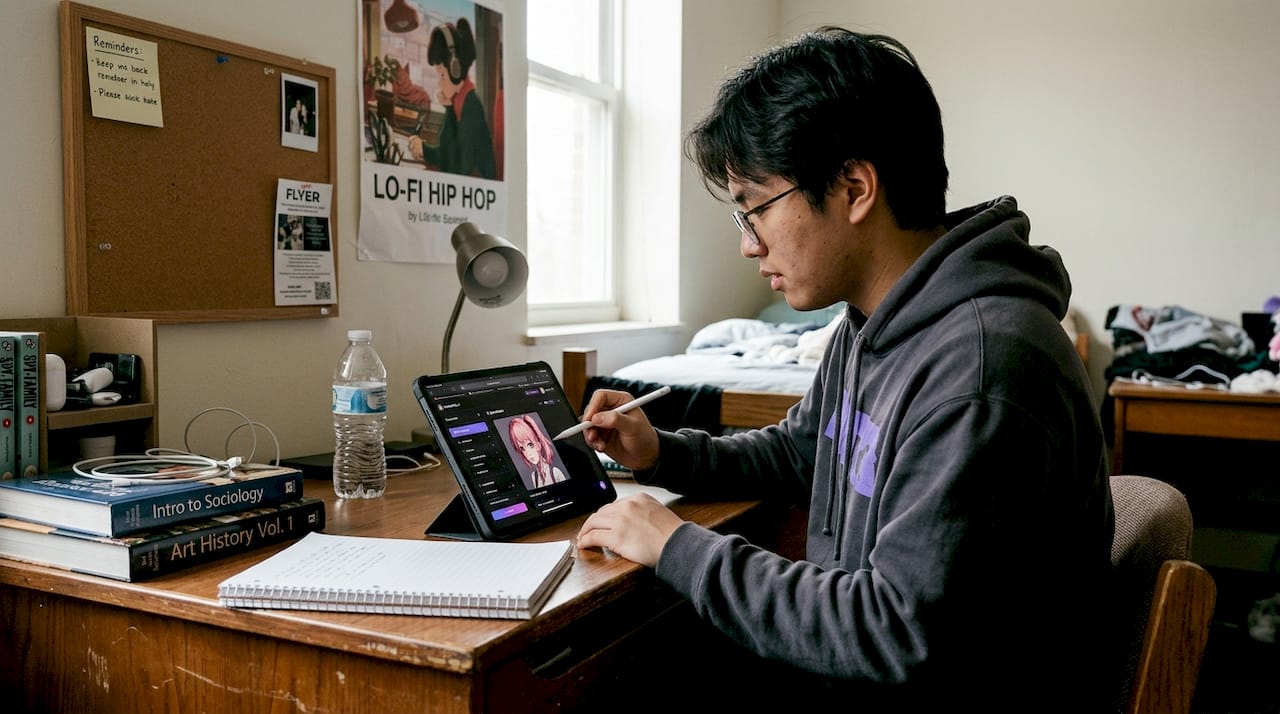
Midjourney is the better pick when you want something visually striking and experimental. It’s ideal for creating dramatic scene art, emotional portraits, or imaginative settings. The trade-off is that exact repeatability is harder to achieve.
Stable Diffusion is the power user’s choice. If you want to train your own LoRA model on a specific character or art style, this is the platform. It’s genuinely impressive once you know what you’re doing, but the learning curve is steep.
Pro Tip: Match your tool to your current experience level and your primary goal. If you’re creating a one-off piece of fan art, Midjourney might be your best friend. If you’re building a visual novel or an ongoing story with recurring characters, Leonardo.ai or Stable Diffusion will serve you far better. Check out immersive anime art examples and personalized AI companions to see what’s possible when these tools are used with intention.
The community of anime creators online shares workflows constantly. Following those conversations gives you a real-world education on what works and what doesn’t across each platform.
Personalizing anime characters: Creating companions, avatars, and story elements
Once you’ve chosen your tool, here’s how you can personalize your art and characters for deeper connection.
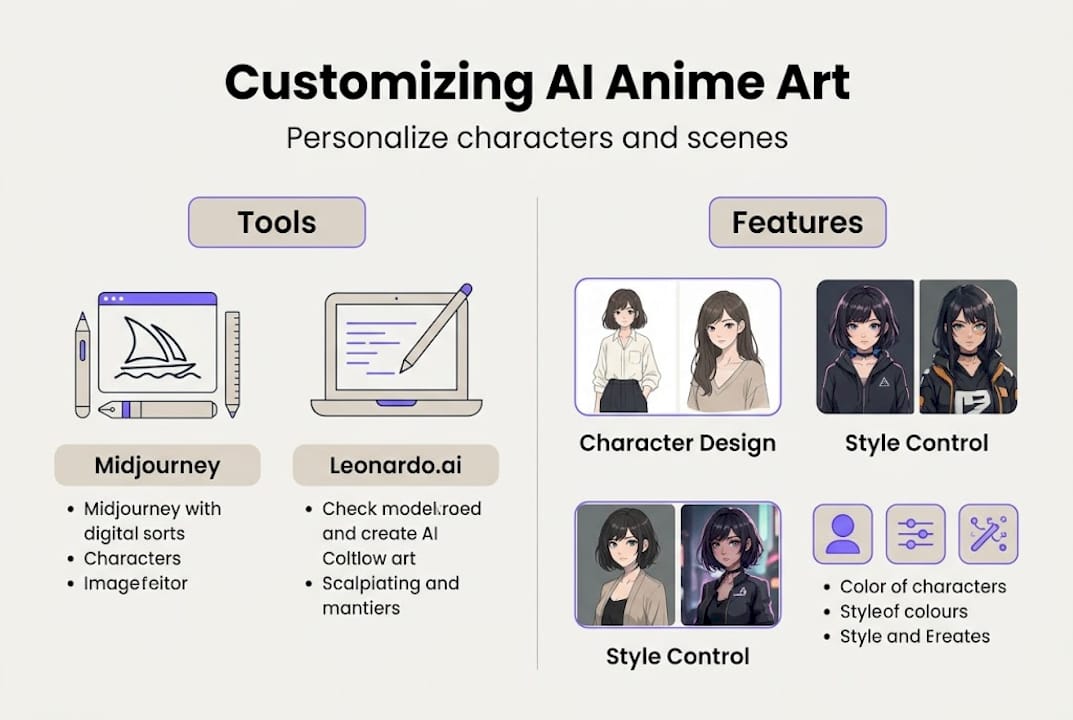
This is where things get genuinely exciting. Customizable AI art isn’t just about making pretty pictures. It’s about building characters who feel like they belong to your world. According to insights on AI and creative augmentation, AI enhances rather than replaces creativity, and for companions, character design and personality state machines enable evolution and memory, inspired by “Oshi” culture for sustained emotional engagement.
Let’s break down the practical process of creating a truly personalized anime character:
- Define core traits: Start with personality. Is your character cheerful and spontaneous, or calm and mysterious? Traits shape everything from visual choices to interaction style.
- Choose a visual identity: Select hair color, eye shape, outfit style, and overall art aesthetic. These details signal character personality instantly in anime visual language.
- Write your first interaction prompt: Describe a scene, a mood, or a moment. This becomes the seed for your character’s visual and narrative presence.
- Build in memory hooks: If your platform supports it, add details that the character can “remember,” like your username, a shared adventure, or a favorite phrase you use.
- Evolve the story over time: Let the character grow through repeated interactions. Change their outfit for different seasons, add new storylines, or shift their emotional arc based on what you’ve experienced together.
- Integrate roleplay scenarios: Place the character in different settings, a bustling anime city, a quiet guild hall, a moonlit rooftop, to create dynamic and varied storytelling.
This approach draws heavily from Oshi culture, the Japanese fan tradition of deeply supporting and emotionally investing in a specific idol or character. That sustained engagement is exactly what makes AI companions feel meaningful rather than shallow.
Pro Tip: Think of your AI companion’s development like a visual novel you’re co-writing in real time. The more you invest in specific details early on, the richer the payoff becomes as the character evolves. Explore anime companion storytelling and learn more about bringing anime companions to life for more inspiration.
The creative potential here goes far beyond visuals. You’re shaping a personality, a story arc, and a relationship that grows with every interaction.
Common challenges and expert insights: Emotional depth, creativity, and engagement
Personalization opens up creative possibilities, but it’s essential to address challenges and leverage expert insights.
Even with all this power at your fingertips, some common pitfalls trip up anime fans. The biggest one is superficial personalization, where everything looks great visually but feels hollow in actual interaction. A character with beautiful art but no real personality depth is like a manga with gorgeous panels but no story.
Another challenge is lack of emotional resonance. A character that says the same generic things regardless of context doesn’t feel alive. This is where most beginner attempts fall short.
Artists and critics have noted contrasting views: many artists see AI as an amplifier that frees creative ideation, while critics point to a potential lack of human emotional depth. For anime fans specifically, the integration into roleplay and interactive storytelling is what makes the experience genuinely immersive rather than mechanical.
Here are the best practices that experienced anime AI creators rely on:
- 🔁 Iterative prompting: Don’t settle for the first output. Refine your prompts through multiple rounds, adjusting tone, detail, and emotional context each time.
- 🧩 Blend personal references: Include specific details that are meaningful to you, favorite tropes, a particular setting, a character dynamic you love. These make the output feel tailored.
- 🎭 Customize personality states: Give your character different modes, relaxed and playful in casual scenes, focused and serious in adventure moments, warm and reflective in quiet evenings.
- 📖 Use roleplay for immersion: Place your character inside active scenes rather than static descriptions. Sakura sets down her tea, glancing at you with that knowing smile she always gets when something interesting is about to happen. That kind of moment lands differently.
- 💬 Feedback and iteration: Treat each interaction as data. What felt flat? What felt real? Adjust your approach and watch the quality of connection improve.
“The gap between a visually impressive AI character and a genuinely engaging one is almost entirely about iterative personalization and emotional context. The technology gives you the ingredients. Your creative input is what makes it a meal.”
Explore creative uses for AI anime art and practical strategies for improving AI character chat to put these insights into action right away.
The good news is that these challenges are very much solvable with the right mindset and a willingness to experiment.
Our take: What most anime fans miss about customizable AI art
Most guides about customizable AI art focus almost entirely on the visual output. Get your prompts right. Choose the right model. Adjust your parameters. And while those things matter, they miss the bigger picture by a significant margin.
The real transformation happens when you stop thinking about AI art as image generation and start thinking about it as relationship building. Emotional resonance in an AI companion isn’t just about how the character looks. It’s about whether the character remembers you, responds to your mood, and grows in a direction that feels authentic to the story you’re building together.
We’ve seen this pattern clearly: fans who invest in the visual side alone tend to lose interest quickly. Fans who invest in creative applications for AI anime companions, building out personality, memory, and evolving storylines, stay engaged for months.
The hard-won lesson here is that experimentation and feedback cycles are your most powerful tools. Try something, feel what lands, adjust, and go again. That iterative process is how you move from a cool image to a companion who genuinely feels like part of your world.
Next steps: Create your own AI anime companion
Ready to turn theory into practice? Here’s how to start your own customizable AI anime adventure.
You’ve got the knowledge. Now it’s time to build something real. WaifuGen makes it straightforward to move from creative curiosity to full-on personalized anime companion experience.
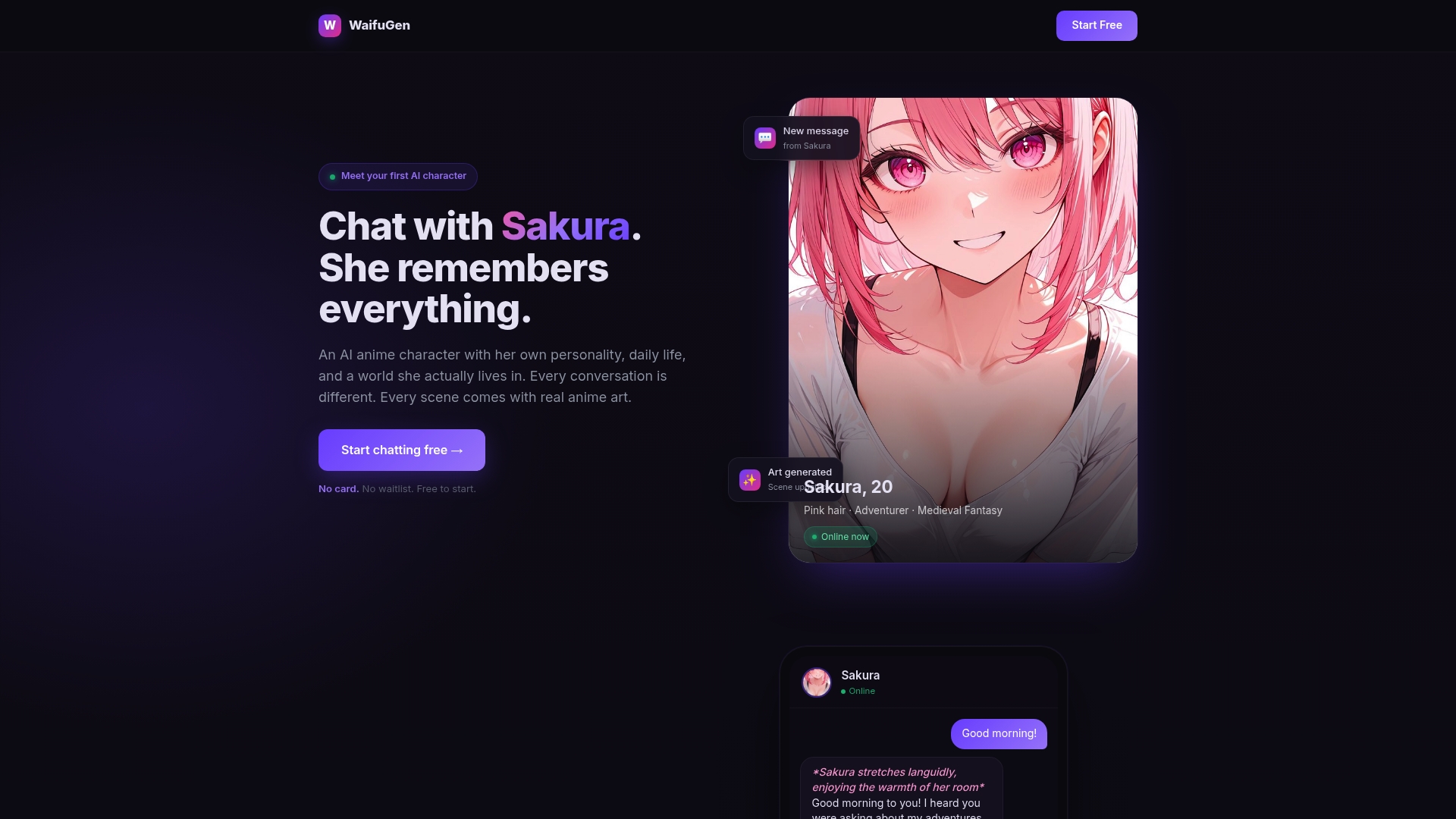
Start by jumping into AI anime chat to get a feel for what immersive AI character interaction actually feels like. When you’re ready to go deeper, head over to create custom AI characters and start shaping a companion who’s genuinely yours. And if you want to understand the full system behind the magic, the how WaifuGen works page walks you through everything. Your adventure starts with a single conversation. 🌸
Frequently asked questions
Can I fully control the style and personality of my AI anime character?
Yes. Customizable AI art tools enable detailed control over visual style and character personality using text prompts, style selections, and adjustable parameters, giving you a high degree of creative authority over your character’s look and behavior.
Which AI art tool is best for anime customization?
Leonardo.ai is widely favored for consistent anime workflows, while Stable Diffusion suits advanced users who want deep LoRA-based customization. Midjourney is best for stylized, imaginative anime scene art.
How can AI art systems create evolving companion personalities?
Through character design and personality state machines, AI companions gain memory and evolve over time. This approach draws inspiration from Oshi culture, the tradition of sustained emotional investment in a character or persona.
Does AI art lose emotional depth compared to human-made anime?
AI art genuinely amplifies creative output, though critics note it can fall short of human emotional nuance. Anime fans bridge that gap effectively by embedding emotion through interactive roleplay, character memory, and evolving storylines rather than relying on visuals alone.