The Role of Art in AI Engagement: What Creatives Need to Know
By The WaifuGen Team · Published June 2026
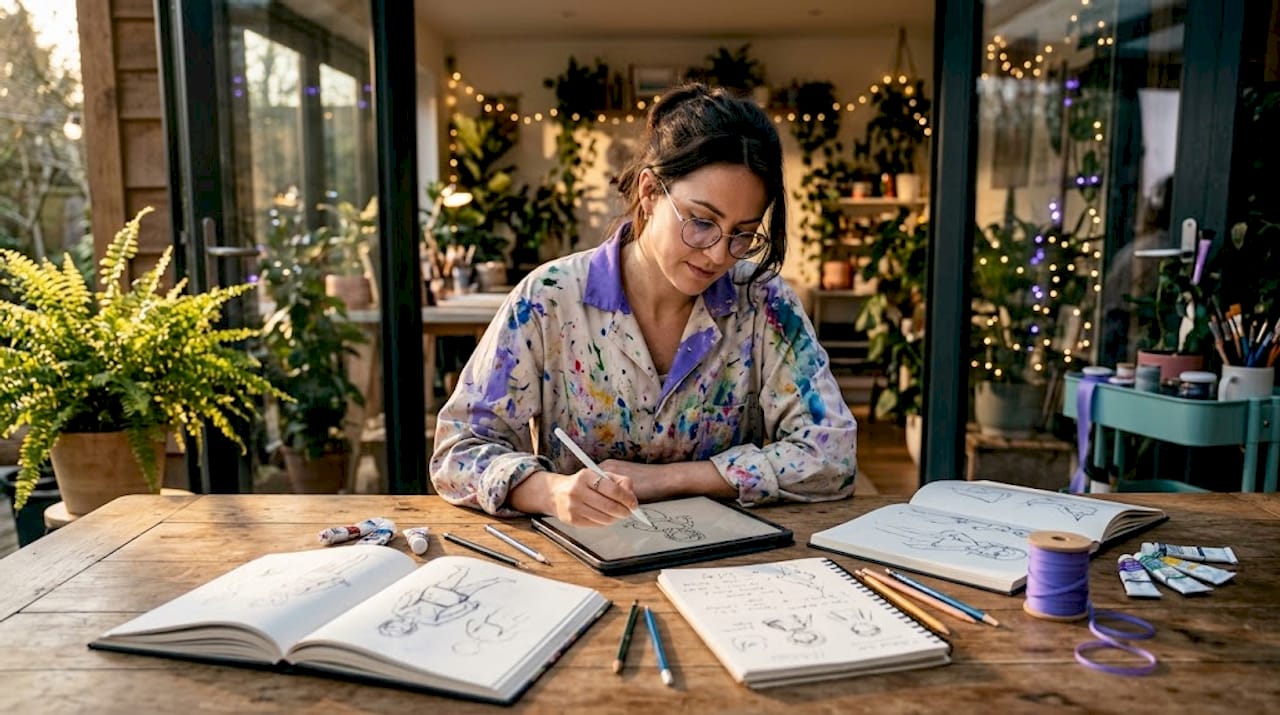
Art has always changed how we connect with technology, and the role of art in AI engagement is more significant than most people realize. The assumption that AI-generated creative work is somehow “less real” misses something important: art is not just the output. It’s the input, the intention, and the direction. Whether you’re a researcher exploring AI and visual arts, a working creative experimenting with new tools, or a tech enthusiast curious about where all this is heading, understanding how art shapes AI interaction unlocks a completely different level of engagement.
Table of Contents
- Key Takeaways
- The role of art in AI engagement: foundations and current landscape
- Why human creativity is the real driver
- Interactive workflows that deepen creative engagement
- Challenges, controversies, and what comes next
- Practical strategies for creatives and researchers
- My take: art is how AI learns to mean something
- Bring your creative vision to life with Waifugen
- FAQ
Key Takeaways
| Point | Details |
|---|---|
| Art drives AI engagement | Human artistic intention and framing determine the quality and meaning of AI-generated creative output. |
| Creatives lead the process | Authentic aesthetic judgment cannot be automated; artists direct AI tools rather than follow them. |
| Perception shapes reception | Audiences often judge AI art based on assumed origin, not actual quality, which affects engagement outcomes. |
| Collaboration beats replacement | Interactive, iterative workflows between artists and AI produce richer results than solo AI generation. |
| Ethics and authorship matter | Clear provenance standards reduce fear and open up creative AI use for more artists. |
The role of art in AI engagement: foundations and current landscape
Before we talk about how art influences AI, it helps to understand what we mean by “AI engagement” in a creative context. This isn’t just about getting a chatbot to respond. AI engagement, in the artistic sense, refers to the depth and quality of interaction between a human creator and an AI system, including how much meaning, intention, and feedback is exchanged during the process.
Right now, AI tools can generate images, write poetry, compose music, and simulate entire visual worlds. But the technology does not operate in a vacuum. About 25% of artists use AI frequently, primarily for idea generation and early-stage creative exploration. That number is higher than the general workforce average, which tells you something: creatives are not avoiding these tools. They are leaning in, especially at the beginning of a project when possibilities are still wide open.
Here’s what AI currently does well in creative contexts:
- Rapid visual ideation: Generating dozens of compositional options in seconds
- Style exploration: Applying and blending aesthetic references across different media
- Pattern recognition: Identifying visual structures humans might overlook in large reference sets
- Narrative scaffolding: Suggesting story beats, character dynamics, or world-building details
What it does not do well, at least not yet, is decide what matters. That part still belongs to you.
Pro Tip: If you’re using AI early in a project, treat it like a brainstorm partner, not a final decision-maker. Your job is to filter, redirect, and choose.
Why human creativity is the real driver
Here’s a framing most articles skip: the quality of AI engagement is almost entirely determined by the quality of human input. Not the prompt alone, but the whole creative posture you bring to the collaboration.
“AI recombines data rapidly but lacks the developed human aesthetic and cultural insights essential to art.” — Creativity, AI, and why creatives lead what comes next
This matters because it reframes the fear. The concern that AI will replace artists misunderstands how artistic expression in AI actually works. Creativity is fundamentally social and meaning-driven. You bring the cultural context, the emotional intent, and the aesthetic identity. The AI brings speed and scale. Neither one alone produces work that truly resonates.
The impact of art on AI comes through several specific mechanisms:
- Framing and intention: A well-framed creative brief to an AI produces entirely different results than a vague one. The artist’s choices about what to ask, what to reject, and what to refine shape the output completely.
- Authorship defense: Successful AI art depends on human framing, choice, and the willingness to defend the final piece as an act of authorship. Evaluation should focus on the gap between the brief and the output.
- Cultural and ethical grounding: AI systems do not carry lived experience. The artist does. When you bring your cultural background, your ethics, and your identity into an AI collaboration, you are filling a gap the technology cannot fill itself.
There are also real tensions here around authorship and ethics. Who owns an AI-generated image? Whose training data made it possible? Uncertainty about authorship and training-data compensation continues to drive tension in AI-art adoption. These are not abstract questions. They affect how creatives engage with these tools and how audiences receive the work.
Interactive workflows that deepen creative engagement
One of the most exciting developments in art and technology collaboration right now is the shift from one-time generation to iterative, participatory creative loops. The old model was: give AI a prompt, receive output, done. The new model looks more like a conversation.
Here’s how a practical iterative workflow might look for a visual artist or character designer:
- Start with a conceptual anchor. Sketch or describe a core visual idea before prompting the AI. This keeps your aesthetic voice in charge from the beginning.
- Generate broadly, then narrow. Use AI to produce a wide range of visual interpretations. Look for unexpected results that surprise you but still feel right.
- Feed iterations back in. Take elements from earlier outputs and use them as reference inputs for the next round. This creates a feedback loop that evolves the work organically.
- Apply critical judgment at each stage. Ask yourself what the AI got right, what it missed, and why. Your aesthetic reasoning is the active ingredient.
- Document your decisions. Keep notes on why you chose certain directions over others. This builds your creative voice and strengthens your authorship of the final piece.
Collaborative platforms have made this kind of creative AI application more accessible across entertainment, game design, and multimedia storytelling. The artists getting the most out of AI are not the ones who prompt and accept. They are the ones who treat AI as a responsive creative environment they move through intentionally.
Pro Tip: When building iterative AI workflows, keep a “reject pile.” The outputs you turn down tell you as much about your aesthetic as the ones you keep.

Challenges, controversies, and what comes next
Not everything about art and technology collaboration is straightforward. There are real sticking points, and pretending otherwise doesn’t help anyone.
Here’s a quick comparison of the current challenges versus the emerging responses:
| Challenge | Current Status | Emerging Response |
|---|---|---|
| Copyright and authorship | Legally unresolved in most jurisdictions | Calls for AI-assisted authorship standards and provenance labeling |
| Training data consent | Ongoing lawsuits and policy debates | Opt-in licensing models being explored by platforms |
| Audience perception bias | Viewers judge work differently when told it’s AI-made | Education and transparent labeling shifting audience norms |
| Technical quality gap | Largely closed at 90-95% parity | Distinction shifting from quality to context and intent |
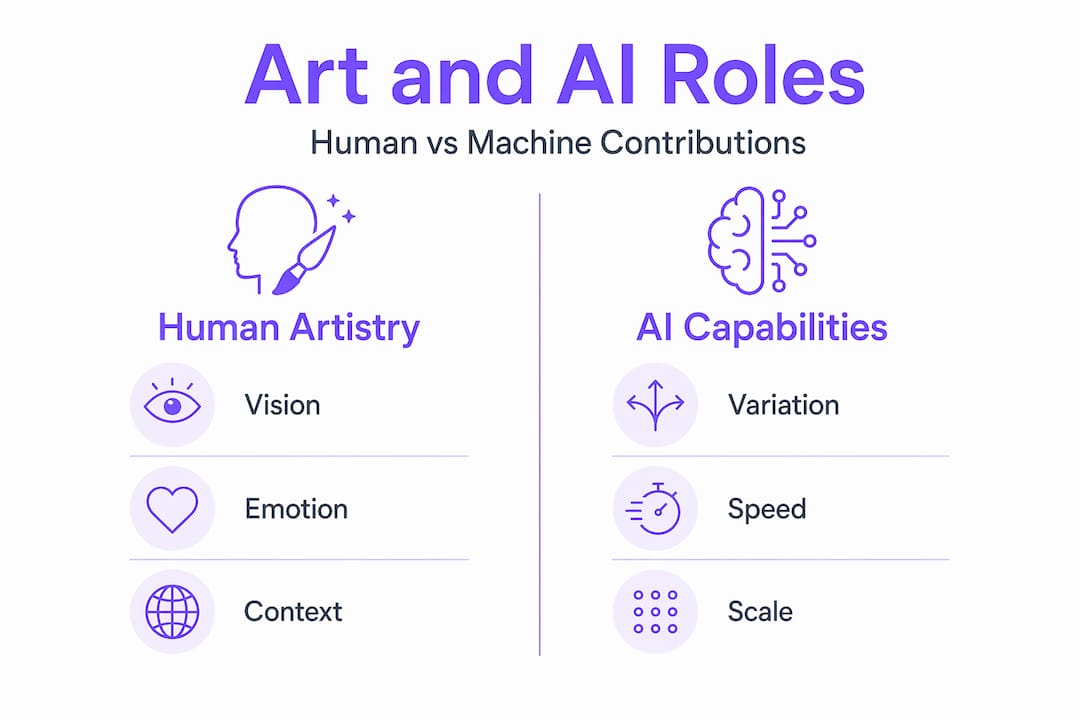
The perception challenge is particularly interesting. Audiences often cannot reliably distinguish AI-made art from human-made art at a technical level. Emotional and evaluative responses shift almost entirely based on assumed origin. Tell someone a painting is AI-generated and they feel differently about it, even if the work is identical. This reveals something important: the role of creativity in AI is not just about the output. It’s about trust, context, and how meaning gets communicated.
For artists navigating this territory, a few principles help:
- Be transparent about your process without apologizing for it
- Frame AI as a tool in your methodology, not as a replacement for your identity
- Advocate for clearer provenance rules that protect both artists and audiences
- Engage with the ethics actively rather than waiting for policy to catch up
Practical strategies for creatives and researchers
The most effective way to use AI as a creative tool is to treat it as what it actually is: a cognitive research assistant that helps you explore visual and conceptual structures you might not find through traditional reference gathering. Experienced practitioners use AI to uncover relationships in visual language, extending their creative thinking rather than offloading it entirely.
Here is what that looks like in practice:
- Research phase: Use AI to map visual precedents, aesthetic genres, or color palettes across large reference sets. This replaces fragmented image searches with structured visual exploration.
- Concept development: Use AI to pressure-test ideas. Generate visual interpretations of your concept and see what the AI “understands” versus what it misses. The gaps reveal where your concept needs more clarity.
- Presentation and communication: AI-generated mockups help you communicate vision to collaborators, clients, or audiences before final execution. This is especially valuable in entertainment and multimedia contexts.
- Learning and skill development: A study of 588 art majors found that active learning engagement reduces procrastination and improves outcomes. AI tools used in structured learning environments show similar patterns: active involvement produces better results than passive generation.
Waifugen’s own creative ecosystem reflects this philosophy. The platform integrates real anime artwork with AI character interactions in ways that show how customizable AI art and narrative-driven engagement can coexist at a high level. Art is not decorative there. It’s functional. It carries mood, personality, and story.
Pro Tip: Before prompting an AI tool for creative work, write down what you want the viewer or reader to feel. That emotional intention will sharpen every decision you make during the process.
My take: art is how AI learns to mean something
I’ve watched the conversation about AI and art go in circles for a few years now. On one side, you have people convinced AI will make human creatives obsolete. On the other, people refusing to touch AI tools at all out of principle. Both positions miss the point.
What I’ve found, watching artists and researchers actually work with these systems, is that the ones doing the most interesting work are not the loudest voices in either camp. They are quietly experimenting, failing, adjusting, and building something genuinely new. They treat AI the same way a filmmaker treats a camera: as a powerful instrument that still requires someone with vision to point it in the right direction.
The uncomfortable truth is that AI engagement without artistic intention produces noise. It is fast, it is volumous, and it is mostly forgettable. What makes AI-generated work stick, emotionally and culturally, is always the human fingerprint on it. The choice of what to make, what to keep, and what to say with it.
My advice to any creative reading this: do not wait for the ethics debates to settle before experimenting. The people shaping how AI tools develop are the ones using them now and pushing back when something feels wrong. Your aesthetic standards, your refusals, and your decisions about authorship are all forms of influence. Use them.
— Roman
Bring your creative vision to life with Waifugen
If this article has you thinking about what genuine art and technology collaboration can look like in practice, Waifugen is worth exploring. The platform is built around the idea that AI characters are most engaging when they are grounded in rich visual art, real personality, and ongoing narrative. Every character comes with anime-style visuals that shift with mood, setting, and story context. That is not decoration. It is art doing exactly what this article describes: driving deeper, more meaningful AI engagement.
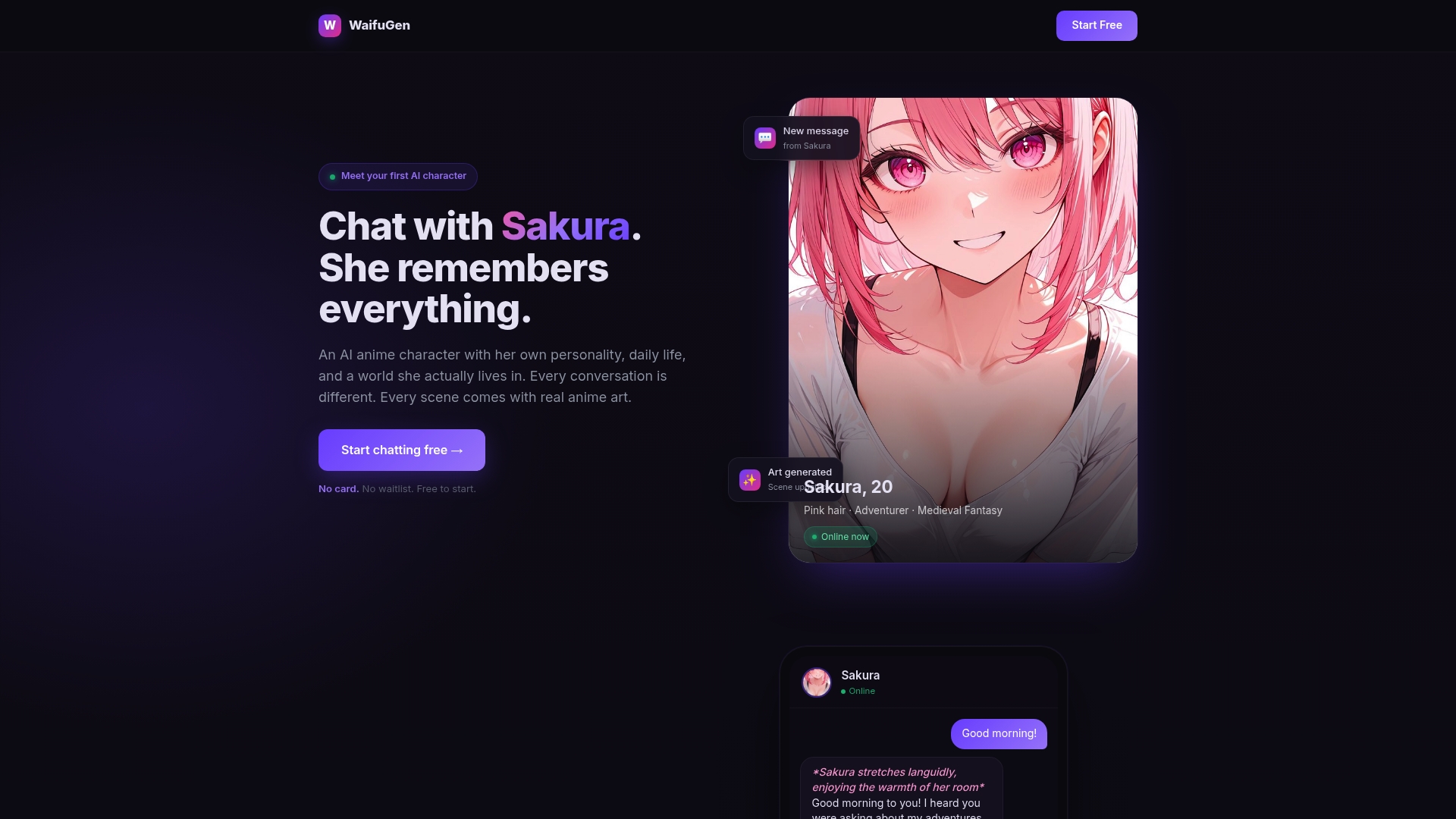
With Waifugen, you are not just chatting with an AI. You are stepping into a visual world where character design, emotional expression, and interactive storytelling work together. Characters remember your conversations, react to context, and exist within scenes that update in real time. If you want to see how artistic expression in AI can create something that actually feels alive, start here. Meet your first AI character and experience what intentional art-driven AI engagement feels like from the inside. ✨
FAQ
What is the role of art in AI engagement?
Art shapes AI engagement by providing the human intention, framing, and aesthetic direction that give AI-generated output meaning. Without artistic input, AI produces content that is technically competent but emotionally flat.
Can art enhance AI interactions?
Yes. Artistic elements like visual design, narrative context, and emotional tone significantly deepen how users respond to AI systems, making interactions feel more personal and memorable.
How do artists use AI as a creative tool?
Artists primarily use AI for idea generation, visual exploration, and iterative design feedback. About 25% of artists use AI frequently, mostly in early creative workflows rather than for final output.
Does AI-generated art count as real art?
Evaluation should focus on the gap between the artist’s creative brief and the final output. When a human makes intentional choices about framing, selection, and authorship, the result qualifies as genuine artistic expression regardless of the tools used.
Why do audiences react differently to AI art?
Audience responses shift based on assumed origin rather than actual quality. At 90-95% technical parity, viewers often cannot reliably distinguish AI art from human-made work, but emotional judgments change dramatically once they are told which is which.